Introduction
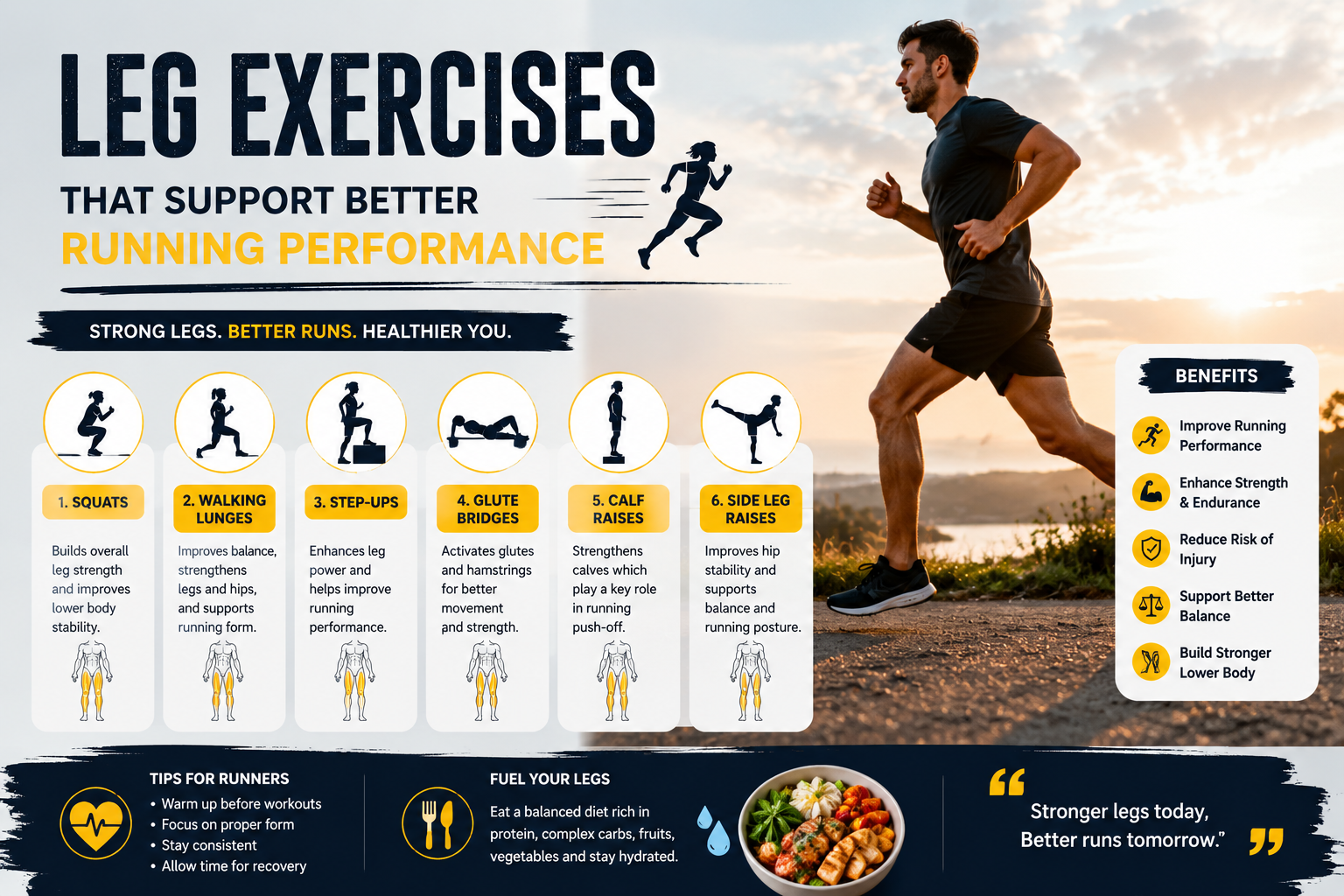
Strong legs play an important role in running performance, comfort, and overall fitness. Many people focus only on running distance and ignore strength training, but adding simple leg exercises to a routine may support balance, movement, and long-term consistency.
You do not need complicated equipment or long gym sessions. A few well-planned exercises can become part of a healthy fitness routine.
In this guide, we explore leg exercises that support better running performance and healthy movement habits.
Why Leg Strength Matters for Runners
Running depends on multiple muscle groups working together.
Strong legs may support:
- Better movement control
- Daily activity performance
- Comfortable training habits
- Improved balance
Balanced fitness routines often create better long-term results.
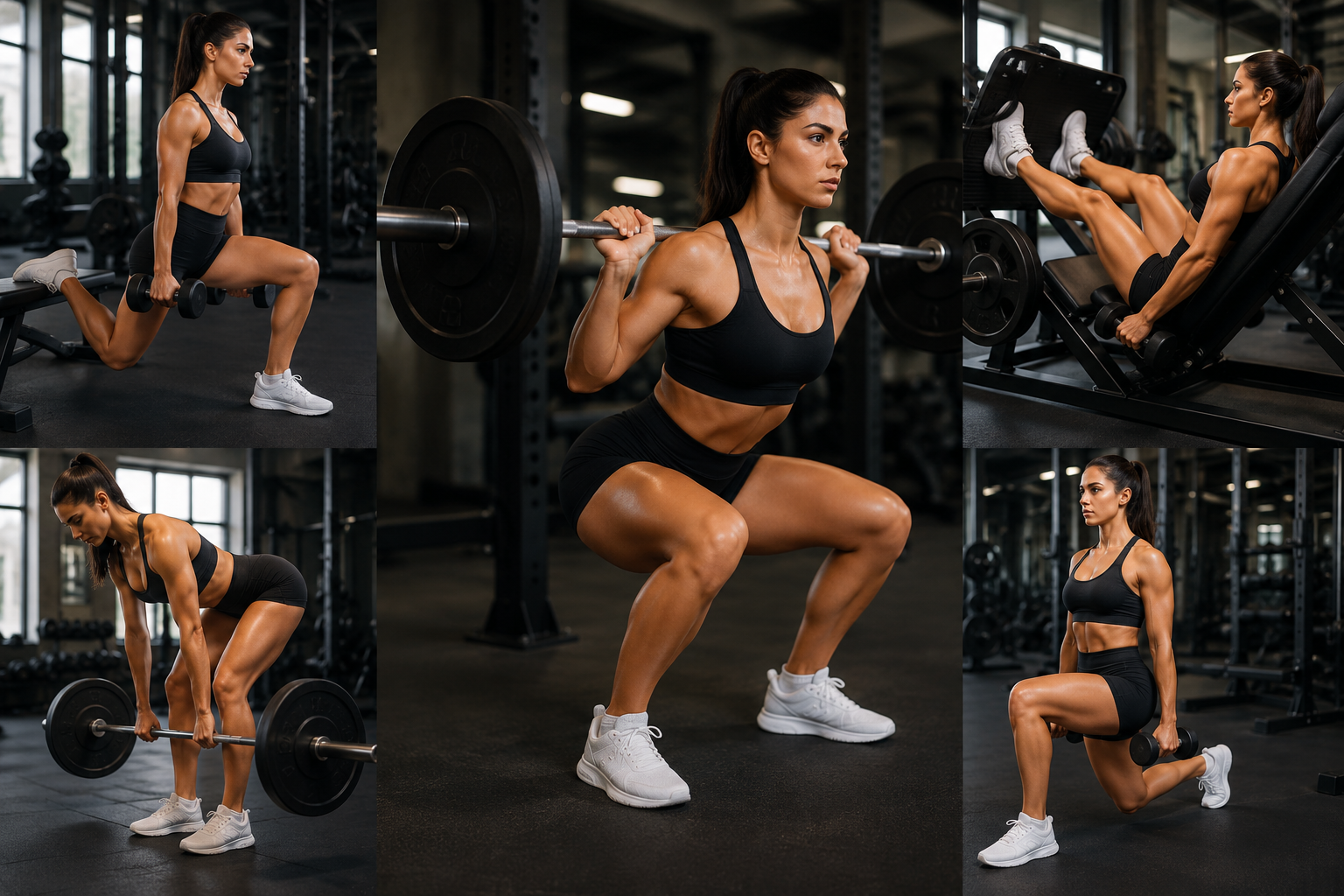
Bodyweight Squats
Squats are one of the simplest lower-body exercises.
Benefits:
- Supports leg movement
- Works multiple muscle groups
- Beginner friendly
How to perform:
- Stand comfortably
- Lower slowly
- Return to standing
- Repeat with control
Walking Lunges
Walking lunges challenge balance and movement.
Why runners often include them:
- Supports lower body strength
- Encourages controlled movement
- Easy to modify
Start with short sets.
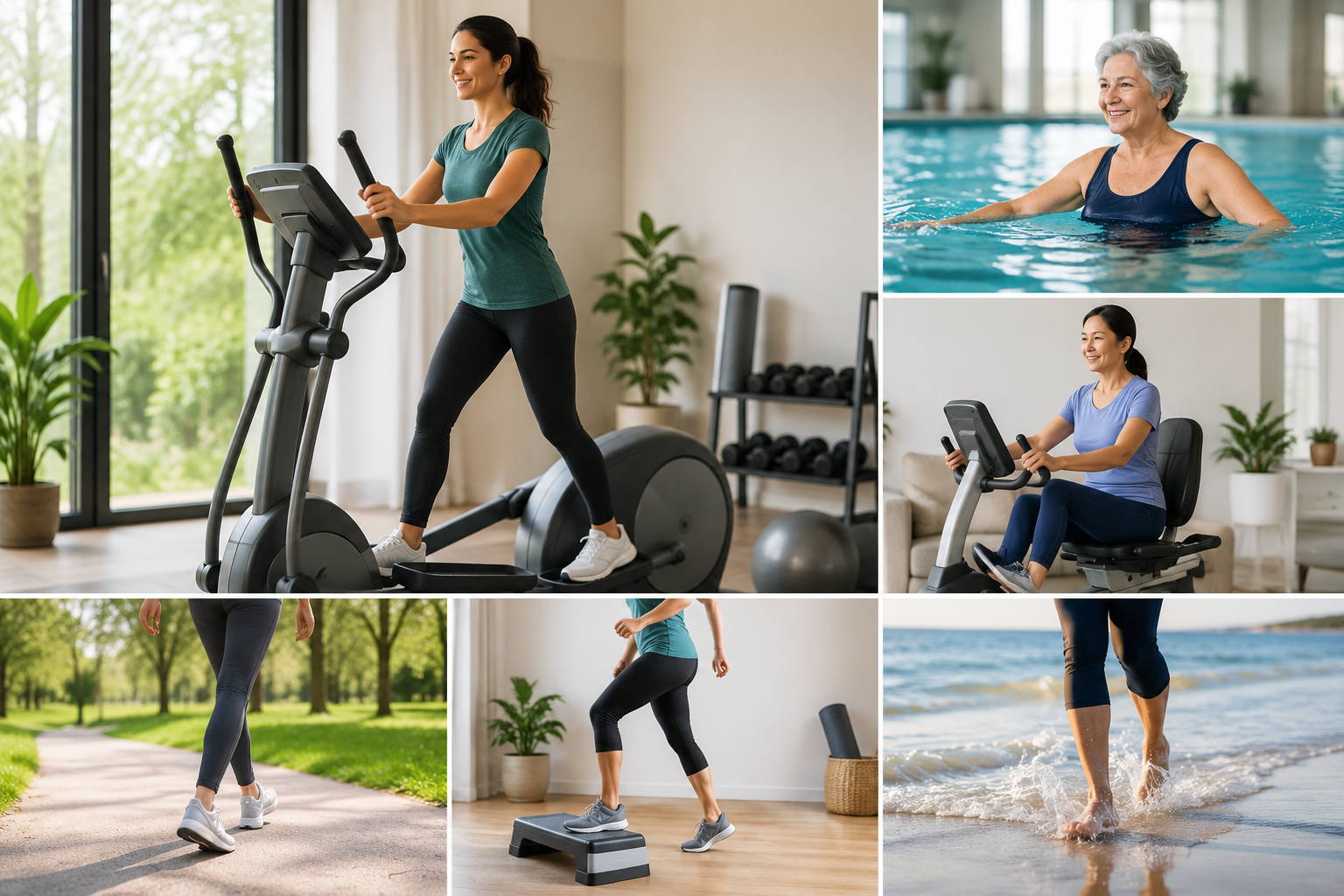
Step-Ups
Step-ups are simple and practical.
Instructions:
- Use a stable platform
- Step upward carefully
- Alternate legs
This exercise supports lower-body movement patterns.
Glute Bridges
Strong hips and glutes support movement.
Benefits:
- Activates lower body
- Supports balanced routines
- Beginner friendly
Perform slowly and focus on form.
Calf Raises
Calf muscles are active during running.
Simple routine:
- Stand upright
- Rise onto toes
- Lower slowly
Repeat comfortably.
Side Leg Raises
Side movements often get ignored.
Benefits:
- Supports stability
- Encourages balanced movement
- Complements running habits
Add Recovery Days
Training every day is not always necessary.
Recovery habits:
- Sleep well
- Stay hydrated
- Include lighter movement days
Recovery supports consistency.
You can also read:
https://wellhealthcare.net/daily-routine-tips-for-better-wellness/
Nutrition Supports Fitness Goals
Exercise works best with balanced eating.
Daily habits:
- Hydration
- Protein sources
- Fruits and vegetables
Common Training Mistakes
Avoid:
- Skipping warm-up
- Increasing intensity too quickly
- Ignoring recovery
- Poor exercise form
Small improvements matter.
Sample Weekly Routine
Day 1
Squats + Walking
Day 2
Light recovery
Day 3
Lunges + Calf Raises
Day 4
Easy activity
Day 5
Glute Bridges + Step-Ups
Keep routines realistic.
FAQ Section
Do runners need strength training?
Many runners include strength work as part of balanced fitness.
How often should leg exercises be done?
Consistency and recovery both matter.
Can beginners do these exercises?
Most exercises can be adjusted for beginners.
Is recovery important?
Recovery supports long-term routines.
Do I need gym equipment?
Many exercises can be done with minimal equipment.
Conclusion
Building stronger legs is not about extreme workouts. Simple exercises such as squats, lunges, step-ups, calf raises, and recovery habits may support better running performance and healthier fitness routines.