Introduction
Heart health is an important part of overall wellness. Daily habits such as balanced nutrition, regular movement, quality sleep, and healthy lifestyle choices all contribute to long-term well-being.
Many people also explore herbs as part of healthy eating routines. Herbs are commonly used around the world in cooking and wellness traditions because they add flavor and can become part of a balanced lifestyle.
In this article, we look at herbs that are commonly included in heart-friendly eating patterns and simple ways to use them in everyday meals.
Why Food Habits Matter for Heart Health
Healthy routines are built through daily choices.
Helpful habits may include:
- Balanced meals
- Regular activity
- Managing stress
- Staying hydrated
- Consistent sleep
No single food or herb replaces healthy lifestyle habits.
Garlic
Garlic is one of the most widely used herbs and ingredients in everyday cooking.
People often include garlic because:
- Easy to add to meals
- Works in many recipes
- Popular in healthy eating routines
Simple ways to use it:
- Soups
- Vegetables
- Home-cooked meals
Ginger
Ginger has been part of traditional food culture for many years.
Why people enjoy ginger:
- Strong natural flavor
- Easy to include in drinks
- Common in wellness routines
Ideas:
- Warm drinks
- Smoothies
- Cooking recipes
Turmeric
Turmeric is known for its bright color and common use in balanced diets.
People include turmeric in:
- Rice dishes
- Soups
- Daily meals
Pairing flavorful ingredients with balanced eating habits may support long-term wellness.
Basil
Basil adds freshness and variety to meals.
Easy ways to enjoy basil:
- Salads
- Homemade sauces
- Vegetable dishes
Simple eating habits often become easier to maintain.
Rosemary
Rosemary is another popular herb used in cooking.
People use rosemary with:
- Roasted vegetables
- Chicken dishes
- Healthy meal preparation
Small changes in meal variety can support consistency.
Cinnamon
Cinnamon is commonly added to:
- Oatmeal
- Warm drinks
- Breakfast recipes
Use moderate amounts and focus on overall balanced nutrition.
You can also read:
https://wellhealthcare.net/what-is-the-best-honey-for-health/
Green Herbs and Daily Nutrition
Fresh herbs can make meals more enjoyable.
Ideas:
- Parsley
- Mint
- Mixed herb meals
Colorful eating patterns often support healthy routines.
Build Heart-Friendly Habits Beyond Herbs
Herbs work best alongside:
- Daily movement
- Nutritious meals
- Sleep habits
- Hydration
- Stress management
Healthy routines matter more than individual ingredients.
You can also read:
https://wellhealthcare.net/best-morning-drinks-for-better-gut-health/
Simple Daily Meal Ideas
Breakfast:
- Oatmeal with cinnamon
Lunch:
- Vegetable meal with herbs
Dinner:
- Balanced plate with fresh ingredients
Keep meals realistic and enjoyable.
FAQ Section
What herbs are commonly included in heart-friendly diets?
Garlic, ginger, turmeric, basil, rosemary, and other cooking herbs are commonly used.
Can herbs replace healthy habits?
No. Overall lifestyle habits remain important.
How can I add herbs daily?
Add small amounts to meals and drinks.
Are fresh herbs better?
Preference varies depending on cooking style.
Do herbs support wellness?
Herbs can become part of balanced eating patterns.
Conclusion
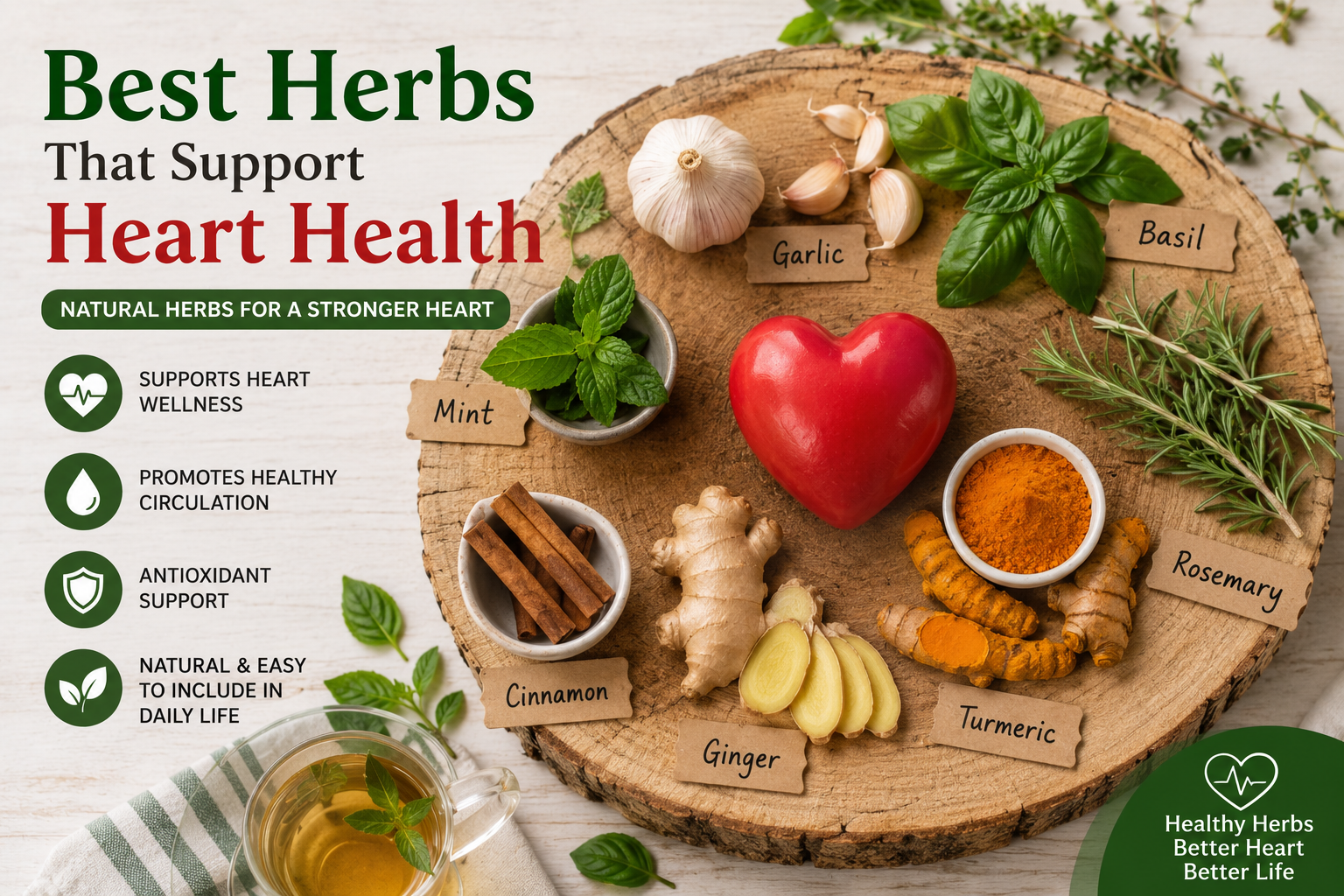
Choosing herbs as part of a healthy eating routine can add variety and enjoyment to meals. Garlic, ginger, turmeric, basil, rosemary, and similar herbs are commonly included in everyday cooking.
Focus on consistency, balanced meals, movement, and healthy routines to support long-term heart wellness.