Introduction
Losing a molar might not feel as noticeable as losing a front tooth, but it can quietly cause a lot of problems over time. Molars do most of the heavy lifting when it comes to chewing, and once one is gone, neighboring teeth can shift, the jawbone underneath can start to shrink, and eating certain foods can become surprisingly difficult.
A molar implant is one of the most effective ways to deal with this. Rather than relying on a bridge that depends on the teeth next to the gap, an implant replaces the entire tooth, root included, with a titanium or zirconia post that fuses directly into the jawbone. This guide walks through what molar implants actually are, how the procedure works, what it costs, what recovery looks like, and how they compare to other options, so you can have an informed conversation with your dentist.
What Is a Molar Implant?
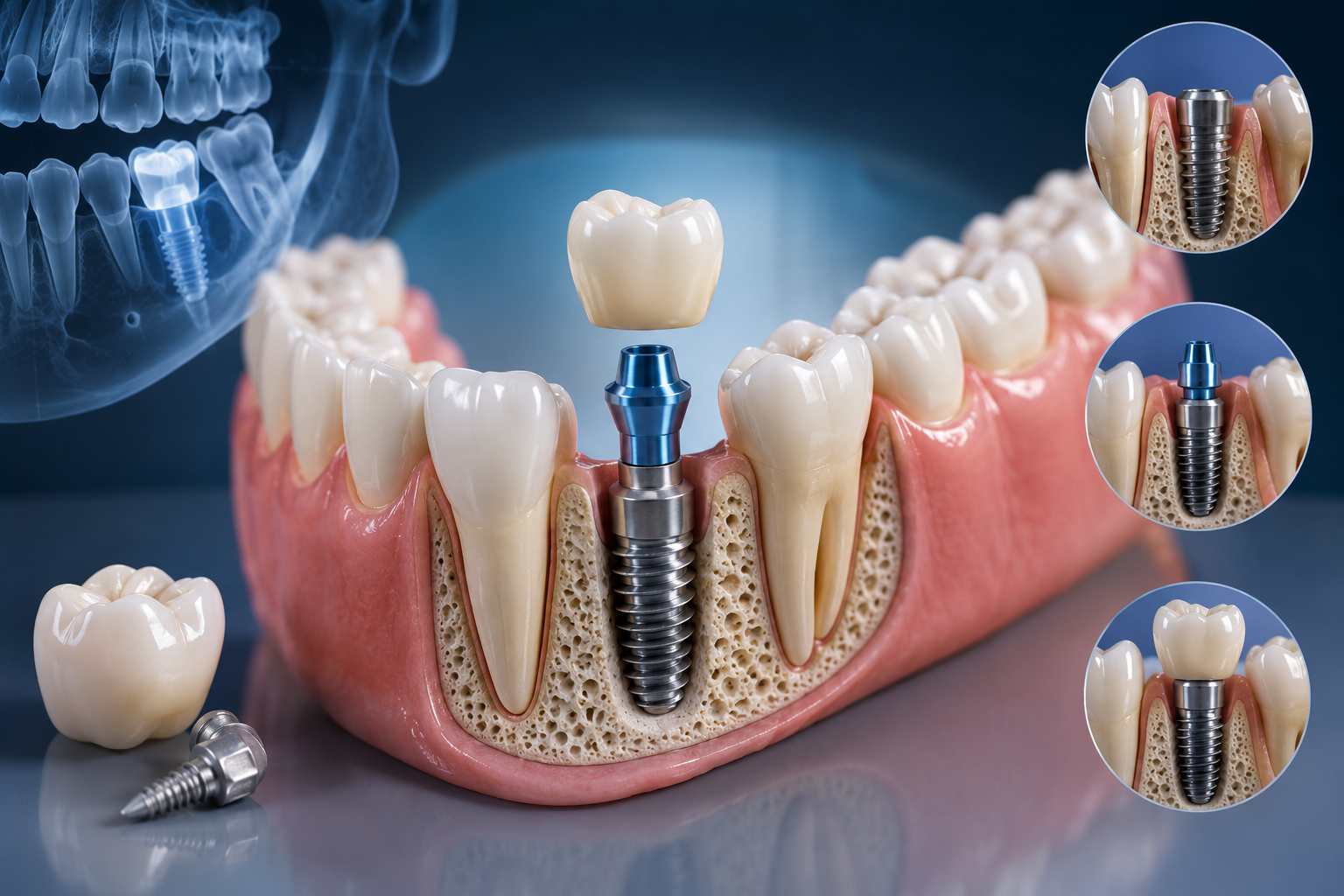
Molar implants are specialized dental restorations designed to replace missing back teeth using titanium or zirconia posts surgically placed into the jawbone. Once the post has fused with the bone, a custom crown is attached on top, recreating the size, shape, and chewing surface of the natural molar that was lost.
What makes molar implants different from implants used for front teeth is the amount of force they need to withstand. These posterior dental implants must withstand greater occlusal forces than front teeth, since molars do most of the grinding and crushing work during chewing. Because of this, molar implants are often slightly wider in diameter than implants used elsewhere in the mouth, and their placement requires careful planning around the jawbone’s structure in that area.
How Molar Implants Differ From Bridges and Dentures
It is common for people to assume an implant works the same way as a bridge or denture, but they are quite different in how they function. Unlike a bridge, an implant does not rely on nearby teeth for support, which helps keep those teeth strong and healthy rather than being filed down and used as anchor points.
Dentures, meanwhile, sit on top of the gums and can shift or feel less stable, especially when chewing tougher foods. An implant, by contrast, is anchored directly into the bone, so it functions much more like a real tooth, both in stability and in the sensation of biting and chewing.
This difference matters most in the back of the mouth, where molars handle the bulk of chewing pressure. A loose-fitting denture or a bridge under strain can wear out faster in this location compared to the front teeth, which is part of why implants are often recommended specifically for molar replacement.
The Molar Implant Procedure, Step by Step
Step 1: Consultation and Planning
Your dentist or oral surgeon will begin with a thorough examination, including X-rays or a 3D scan, to assess the condition of your jawbone, the position of nearby teeth and nerves, and whether you have enough bone density to support an implant. This planning stage is especially important for molars, given the higher biting forces the implant will need to handle.
Step 2: Preparatory Procedures, If Needed
If preparatory procedures like tooth extractions or bone grafts are necessary, these are typically completed first. Bone grafting is more common in the molar region than elsewhere in the mouth, particularly if the tooth has been missing for a while or if the bone has thinned over time. Healing from a bone graft can take a few months before the implant itself is placed.
Step 3: Implant Placement
The surgical insertion of the implant post into the jawbone is done under local anesthesia, so discomfort during the procedure itself is minimal. The post is placed precisely where the tooth root used to be, and the gum tissue is then closed over or around it.
Step 4: Healing and Osseointegration
After placement, the implant needs time to fuse with the surrounding bone in a process called osseointegration. This typically takes a few months, and is one of the most important stages of the entire process, since the strength of this bond determines how well the implant will hold up under the heavy chewing forces molars experience daily.
Step 5: Abutment and Crown Placement
Once the implant has fully integrated with the bone, an abutment and a custom-made crown are attached. The crown is shaped and sized to match the chewing surface of a natural molar, restoring full function to that side of your mouth.
How Long Does the Whole Process Take?
Because molar implants involve a healing period for osseointegration, the entire process from initial placement to final crown can take anywhere from three to six months, sometimes longer if a bone graft was needed beforehand. While this might sound like a long timeline, most of it involves simply allowing the body to heal naturally in the background, with relatively few in-office visits required during the healing phase itself.
What Does a Molar Implant Cost?
Cost is often one of the biggest questions patients have, and it is a fair one, since molar implants are a meaningful investment.
Plan on the total cost for a single molar implant to range anywhere from $3,000 to $6,500, when accounting for all of the components involved. This typically breaks down as follows.
Implant placement, meaning the surgical insertion of the post itself, typically costs between $1,500 and $3,000 per implant.
Abutment and crown, attached after the implant has integrated with the bone, usually adds another $1,300 to $3,000 to the total.
Additional procedures, such as tooth extractions or bone grafts if they are needed beforehand, can add anywhere from $500 to $3,000 depending on complexity.
These figures can vary depending on your location, the materials used, and the experience of your provider. Urban areas with a higher concentration of specialists often charge more than rural practices, and regional differences of twenty to thirty percent or more are not unusual for similar procedures.
Does Insurance Cover Molar Implants?
Dental insurance sometimes helps with the cost, but coverage is often limited. Many plans consider implants a cosmetic procedure, even though they serve a clear functional purpose, especially for molars. Some insurance companies will cover parts of the process, like the crown or anesthesia, while excluding the implant post itself. On average, insurance might cover somewhere between $1,000 and $2,000 of the total cost, leaving the rest as an out-of-pocket expense. It is worth calling your insurance provider directly and asking specifically what portion of an implant procedure, if any, is covered under your plan.
Recovery After a Molar Implant
A common misconception is that getting an implant is a painful and complicated process. In reality, recovery is usually manageable, with mild discomfort for a few days, similar to what you might experience after a tooth extraction.
In the days following surgery, it is normal to experience some swelling, mild soreness, and possibly slight bruising around the area. Most dentists recommend sticking to softer foods for the first several days, avoiding chewing directly on the implant site until it has had time to settle, and being diligent about oral hygiene to keep the area clean while it heals.
Pain is typically managed well with over-the-counter pain relievers, though your dentist may prescribe something stronger for the first day or two if needed. Most people are able to return to normal daily activities within a day or two, even though full healing and bone integration takes considerably longer in the background.
Why Replacing a Missing Molar Matters
It can be tempting to leave a gap where a molar used to be, especially since it is not visible when you smile. However, molar implants provide permanent solutions for replacing missing back teeth, restoring essential chewing function and preventing bone loss, both of which matter more than people often expect.
When a molar is missing for an extended period, the jawbone in that area can begin to shrink due to lack of stimulation, since chewing forces are what normally keep that bone strong and dense. Neighboring teeth can also gradually shift into the empty space, leading to bite problems and additional dental work down the line. Replacing the molar with an implant restores the stimulation the jawbone needs and prevents the surrounding teeth from drifting out of position.
There is also a practical, everyday benefit. Chewing efficiently on both sides of the mouth makes eating more comfortable and helps avoid placing excessive strain on the teeth that are left doing all the work.
Is a Molar Implant Right for You?
Molar implants tend to be a strong option for people who have good overall oral health, sufficient bone density in the jaw, and are looking for a long-term, durable solution rather than something that will need frequent adjustment or replacement. They are generally not recommended for people with uncontrolled gum disease or significant bone loss without first addressing those issues, which is part of why the consultation and planning stage is so important.
If you are unsure whether you are a good candidate, a consultation with a dentist or oral surgeon who has experience specifically with posterior implants is the best way to get a clear, personalized answer. For more on maintaining strong oral health overall, our guide on Benefits of Tongue Scraping for Better Oral Health covers simple daily habits that support a cleaner, healthier mouth alongside any restorative dental work you may have done.
Final Thoughts
A molar implant is a significant but worthwhile investment for anyone dealing with a missing back tooth. It restores real chewing function, protects the jawbone from gradual loss, and keeps neighboring teeth from shifting out of place, all while feeling and functioning much closer to a natural tooth than a bridge or denture typically would.
While the process does take a few months from start to finish, and the cost is something to plan for carefully, most patients find the recovery far more manageable than they expect, and the long-term benefits well worth the investment. If you are missing a molar and have been putting off doing anything about it, scheduling a consultation is a good first step toward understanding your options and getting a clear, personalized cost estimate.