Introduction
Healthcare is one of the most data-intensive, regulation-heavy, and mission-critical industries in the world. The software that powers it must do far more than manage appointments or store records — it must support clinical decision-making, protect sensitive patient data, comply with complex regulations, integrate with dozens of other systems, and ultimately contribute to better patient outcomes.
Off-the-shelf software solutions can handle some of these needs. But for healthcare organizations with specific workflows, unique patient populations, specialized clinical requirements, or ambitions to innovate, custom healthcare software development has become not just an option — it is a critical strategic investment.
In 2025, custom healthcare software development is not just an option — it is a critical strategy for managing unique challenges across patient care, operational efficiency, and regulatory compliance. The global digital health market is projected to surpass roughly $1 trillion by 2034, growing at double-digit compound annual growth rate on the back of AI, IoT, and remote monitoring. The healthcare IT market alone is forecast to reach $974.5 billion by 2027.
This guide covers everything healthcare organizations, clinicians, administrators, and technology decision-makers need to know about custom healthcare software development — from what it is and the types of solutions available, to the development process, cost considerations, and how to choose the right development partner.
What Is Custom Healthcare Software Development?
Custom healthcare software development refers to the process of designing, building, and deploying software solutions specifically tailored to the needs of a particular healthcare organization, clinical specialty, or patient population — rather than purchasing a pre-built, one-size-fits-all product.
Custom software is built from the ground up — or assembled from carefully selected components — to match the exact workflows, data requirements, integration needs, and regulatory obligations of the organization commissioning it. Every feature, interface, and integration is designed with that specific context in mind.
This is fundamentally different from off-the-shelf solutions like generic practice management systems or standard electronic health record platforms, which are designed to work adequately for a wide range of organizations but are rarely a perfect fit for any of them.
The adoption of digital solutions in healthcare is projected to continue growing, with the healthcare IT sector expected to reach $662 billion by 2026 — a figure that reflects the enormous scale of investment flowing into healthcare technology globally.
Custom vs Off-the-Shelf Healthcare Software
Understanding the difference between custom and off-the-shelf software is essential before making any development decision.
Recent comparisons of custom versus pre-built healthcare software show that off-the-shelf tools usually win on time-to-first-deployment, while custom wins on total cost of ownership and scalability once you factor in workarounds, integrations, and license costs over three to five years.
| Factor | Custom Software | Off-the-Shelf Software |
|---|---|---|
| Initial cost | Higher | Lower |
| Long-term cost | Often lower | Can escalate with licenses |
| Fit to your workflows | Perfect | Approximate |
| Integration flexibility | Full control | Limited |
| Scalability | Designed for your growth | May require costly upgrades |
| Regulatory compliance | Built to your requirements | May not cover all scenarios |
| Competitive advantage | High — unique to your org | Low — shared with competitors |
| Time to deploy | Longer | Faster |
In 2026, the smarter approach for most teams is often a hybrid: reusing healthcare-specific building blocks — such as authentication, protected health information storage, audit logs, and patient portals — while keeping workflows, the data model, and user experience fully under organizational control.
Types of Custom Healthcare Software
Custom healthcare software spans a remarkably wide range of application types. Understanding the most common categories helps organizations identify where custom development would add the most value.
Electronic Health Record Systems (EHR/EMR)
Electronic Health Records are the foundational layer of clinical software — storing patient history, diagnoses, medications, lab results, imaging, and treatment plans. Custom EHR development allows healthcare organizations to build systems that match their specific clinical workflows rather than adapting to the constraints of commercial platforms.
Custom EHR systems are particularly valuable for specialist practices, research hospitals, and organizations operating across multiple care settings that need a unified record experience without compromise.
Telemedicine and Telehealth Platforms
The rise of telemedicine has necessitated the development of platforms that support remote consultations and monitoring, making healthcare more accessible. Custom telemedicine platforms can be designed to match the specific clinical needs of a practice — from secure video consultation and remote prescription to integrated vital sign monitoring and asynchronous messaging.
Telehealth alone is expected to reach around $175 billion by 2026, driven by virtual care models, remote patient monitoring, and hybrid clinics that blend in-person and digital services.
Remote Patient Monitoring (RPM) Software
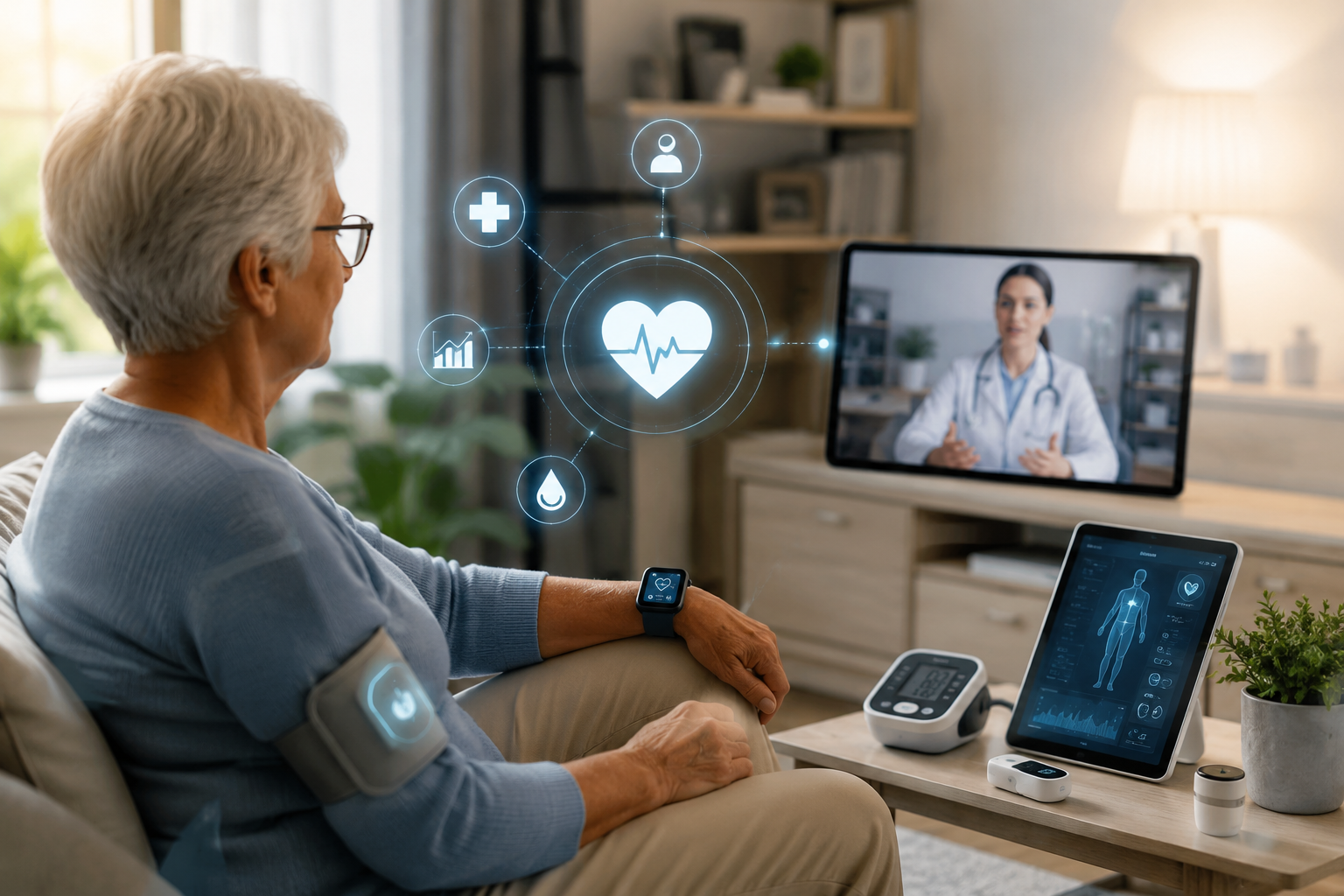
Remote patient monitoring software connects wearable devices, smart sensors, and home health equipment to clinical dashboards, allowing care teams to monitor patients continuously outside of clinical settings. Custom RPM software can be built to integrate with specific device ecosystems, alert clinical staff according to custom threshold parameters, and feed data directly into the organization’s EHR.
Healthcare Mobile Applications
Mobile health applications serve patients, clinicians, and caregivers across a wide range of use cases — from appointment booking and medication reminders to chronic disease management, mental health support, and care coordination. Custom mobile app development allows healthcare organizations to design patient-facing experiences that reflect their brand, their specific patient population, and their clinical priorities.
Practice Management and Scheduling Software
Custom practice management systems streamline the operational side of healthcare — scheduling, billing, insurance claims, patient registration, staff management, and reporting. Off-the-shelf systems often force organizations into generic workflows. Custom systems are built around how the organization actually operates.
Hospital Information Systems (HIS)
Large hospitals and health systems require comprehensive software infrastructures that manage everything from patient admissions and clinical workflows to supply chain management, staffing, and financial operations. Custom hospital information systems provide the integration, flexibility, and scalability that large institutions need.
Laboratory Information Systems (LIS)
Custom laboratory information systems manage specimen tracking, test ordering, results reporting, and quality control in clinical and research laboratories. They can be built to integrate seamlessly with EHRs, hospital systems, and external reference laboratory platforms.
Mental Health and Behavioral Health Platforms
Custom mental health platforms address the unique requirements of behavioral health care — including therapist-patient communication, mood tracking, care plan management, crisis support tools, and integration with community support services.
Healthcare Analytics and Business Intelligence
Custom analytics platforms aggregate and analyze clinical, operational, and financial data to support decision-making at every level of the organization — from population health management and quality improvement to revenue cycle optimization and resource planning.
Patient Engagement Software
Custom patient engagement software helps healthcare organizations enhance communication with patients, ensuring they stay informed about their treatment plans, medications, and appointments. Well-designed engagement tools improve adherence, reduce no-shows, and support better health outcomes.
Key Benefits of Custom Healthcare Software Development
Perfect Fit for Your Workflows
Every healthcare organization operates differently. Custom software is built around how your team actually works — eliminating the workarounds, manual processes, and frustrations that come from forcing staff to adapt to software that was never designed for them.
Long-Term Cost Efficiency
While custom software development can be more expensive upfront than off-the-shelf solutions, it can save money in the long run by improving efficiency, reducing errors, and preventing the need for costly workarounds. Organizations also avoid escalating per-seat licensing fees and unexpected upgrade costs.
Seamless Integration
Custom healthcare software is designed for seamless integration with existing systems such as EHRs, laboratory systems, medical devices, and third-party applications to ensure interoperability and efficiency. Healthcare organizations typically operate a complex ecosystem of systems — custom software is built to fit within it rather than alongside it.
Regulatory Compliance by Design
Healthcare software must comply with regulations including HIPAA in the United States, GDPR in Europe, and a range of national and regional frameworks. Custom software is built with these requirements embedded from the ground up rather than retrofitted later.
Competitive Advantage
Off-the-shelf software is used by your competitors too. Custom software gives your organization capabilities, workflows, and patient experiences that are unique to you — a genuine source of competitive differentiation in an increasingly consumer-driven healthcare market.
Scalability
Custom software is designed with your growth trajectory in mind. As your patient population, service lines, or geographic footprint expands, the software can be scaled and extended without the constraints imposed by commercial platform roadmaps.
AI and Advanced Technology Integration
Healthcare executives are embracing AI-driven software, as clinicians increasingly work alongside intelligent systems to improve patient care and operational efficiency. Custom development allows organizations to build AI capabilities directly into their workflows — from diagnostic support and predictive analytics to administrative automation. Analysts estimate that wider AI adoption in US healthcare could save $200 to $360 billion annually through efficiency gains. The global AI in healthcare market is projected to reach $164 billion by 2030.
The Custom Healthcare Software Development Process
Understanding the development process helps organizations set realistic expectations and engage more productively with development partners.
Phase 1 — Discovery and Requirements Gathering
Every successful custom healthcare software project begins with deep discovery. This phase involves extensive consultation with clinical staff, administrators, patients, and other stakeholders to understand current workflows, pain points, technical requirements, regulatory obligations, and strategic goals.
The output of this phase is a detailed requirements specification that defines what the software must do, who will use it, what systems it must integrate with, and how it will be measured for success.
Phase 2 — System Architecture and Design
Based on the requirements, the development team designs the technical architecture of the system — selecting appropriate technologies, defining data models, planning integrations, and designing the user experience.
User experience design is particularly critical in healthcare software. If older users are your target audience, you might want to use bolder buttons, legible typefaces, and an uncomplicated user interface. Good UX is not just about aesthetics — it directly affects clinical efficiency and patient safety.
Phase 3 — Development
The core development phase builds the software according to the agreed specifications and architecture. Healthcare software development typically uses agile methodologies — delivering functionality in iterative sprints that allow requirements to be refined as understanding deepens.
Technologies used in custom healthcare software development include AI and machine learning, blockchain for data integrity, IoT for device connectivity, cloud computing for scalability and accessibility, and big data analytics for population health management.
Phase 4 — Quality Assurance and Testing
Healthcare software requires rigorous testing before deployment. This includes functional testing, security testing, performance testing, integration testing, and — critically — compliance testing to verify that all regulatory requirements are met.
Phase 5 — Regulatory Compliance and Security Review
HIPAA compliance typically adds 15 to 25 percent to overall development costs, or $15,000 to $75,000 for most projects. This includes implementing encryption, audit trails, access controls, security assessments, and compliance documentation. This investment is non-negotiable — non-compliance carries severe financial and reputational penalties.
Phase 6 — Deployment and Integration
The software is deployed in the production environment and integrated with existing systems. A structured rollout plan — which may involve phased deployment across departments or locations — minimizes disruption to clinical operations.
Phase 7 — Training and Change Management
Even the best software fails if staff do not know how to use it effectively. Comprehensive training programs and change management support are essential components of a successful healthcare software deployment.
Phase 8 — Ongoing Maintenance and Evolution
Healthcare software is never truly finished. Organizations should budget 15 to 25 percent of initial development costs annually for maintenance, security updates, and compliance updates. Additional costs include user support, feature enhancements, and scaling expenses as user bases grow.
Custom Healthcare Software Development Costs in 2025
Cost is one of the most important practical considerations. Healthcare software development costs in 2025 range from $30,000 for basic applications to $500,000 or more for comprehensive healthcare platforms.
A more detailed breakdown:
| Project Type | Cost Range |
|---|---|
| Basic mobile health app | $30,000 – $80,000 |
| Small project (simple functionality) | $20,000 – $50,000 |
| Mid-tier platform (RPM, telehealth) | $100,000 – $200,000 |
| Full EHR integration | $200,000+ |
| Enterprise-level platform with AI | $500,000+ |
Factors that influence cost:
Team location — US-based developers charge $100 to $200 per hour. Offshore options in Eastern Europe or India range from $50 to $100 per hour, potentially halving costs without necessarily compromising quality.
Compliance requirements — HIPAA audits add 10 to 20 percent to budgets.
Timeline — Rushed timelines increase rates by up to 25 percent. Allowing adequate time saves significant money.
Integration complexity — Each additional system integration adds to both development time and testing requirements.
AI features — Incorporating machine learning or AI-powered functionality significantly increases both development time and cost.
Recommended approach: Start with a Minimum Viable Product (MVP) to validate concepts before scaling. An app’s initial version typically has certain restricted features, which is perfectly acceptable. Your software can benefit consumers far more if it is smaller and more specifically designed to address a specific need — but always create a scalable architecture from the ground up.
When Should a Healthcare Organization Choose Custom Development?
Custom software is not always the right answer. Here are the key scenarios where it makes the most sense:
When upgrading legacy systems — Healthcare providers still using outdated software systems may experience inefficiencies, security risks, and difficulty with integration. Custom software helps modernize IT infrastructure and enhances operational efficiency.
When off-the-shelf solutions do not fit — If your organization consistently works around the limitations of commercial software, the productivity cost and risk of those workarounds likely justifies custom development.
When competitive differentiation matters — For organizations competing on patient experience, clinical innovation, or operational excellence, custom software is a genuine source of advantage.
When you serve a specialist population — Specialist practices, research institutions, and organizations serving populations with unique needs often find that no commercial product adequately addresses their requirements.
When patient engagement is a priority — Custom patient engagement software helps healthcare organizations enhance communication with patients, ensuring they stay informed about their treatment plans, medications, and appointments.
Choosing the Right Custom Healthcare Software Development Partner
The development partner you choose will have a significant impact on the success of your project. Key factors to evaluate:
Healthcare domain expertise — Technology skills are necessary but not sufficient. Your development partner must understand healthcare workflows, clinical terminology, regulatory requirements, and the specific challenges of the care settings you operate in.
Compliance track record — Ask specifically about HIPAA compliance experience and what security measures are standard in their development process.
Integration experience — Most healthcare software projects require integration with EHRs, medical devices, and other systems. Verify the partner’s experience with the specific integrations you will need.
Agile methodology — Healthcare requirements evolve. A partner that works in iterative sprints allows you to refine requirements as the project progresses rather than committing to a specification that may not perfectly match your needs six months later.
Maintenance and support — Development does not end at deployment. Confirm the partner’s approach to ongoing maintenance, security updates, and feature development.
References and case studies — Ask for examples of similar projects — healthcare organizations, clinical contexts, and technical challenges that resemble yours.
The Future of Custom Healthcare Software
The landscape of custom healthcare software development is evolving rapidly. Key trends shaping where the field is heading:
AI-native architecture — Rather than adding AI features to existing systems, organizations are beginning to build AI capabilities into the core architecture of their software from day one. The global AI in healthcare market is projected to soar to $164 billion by 2030.
Interoperability as standard— Regulatory pressure and market forces are pushing toward greater interoperability between systems, with standards like FHIR enabling richer data exchange.
Voice and ambient interfaces AI-powered ambient documentation tools that listen to clinical conversations and automatically generate notes are becoming part of the clinical software landscape 75 percent of healthcare providers reported improved work efficiency after adopting ambient AI documentation.
Blockchain for data integrity — Blockchain technology is being explored for patient data integrity, consent management, and supply chain verification in pharmaceutical and medical device contexts.
Edge computing for real-time care Processing health data at the edge on the device itself rather than in a central cloud enables faster response times for time-critical monitoring applications.
For more on how technology is transforming healthcare delivery, explore the full Health and Healthcare section on Wellhealthcare.
Final Thoughts
Custom healthcare software development is one of the most significant technology investments a healthcare organization can make. Done well, it delivers workflow efficiency, clinical quality improvements, regulatory confidence, and long-term competitive advantage that generic off-the-shelf solutions simply cannot match.
The key to success is approaching the investment strategically — with deep requirements discovery, the right development partner, realistic budgets and timelines, and a long-term commitment to maintaining and evolving the software as your organization and the healthcare landscape continue to change.
Healthcare is too important and too complex for software that merely gets the job done. Custom development builds systems that truly support the mission of delivering excellent care to every patient, every time.