Introduction
Finding the right dermatology and skin care provider can feel overwhelming, especially when you are dealing with a skin condition that affects your comfort, confidence, or health. For residents of Peabody, Massachusetts and the surrounding North Shore communities, the good news is that quality dermatological care is accessible and understanding what to expect from that care can make the experience far more productive.
This guide covers everything you need to know about dermatology skin care in Peabody, from the types of services available and what conditions dermatologists treat, to how to prepare for your appointment and what daily skin care habits you can build at home to support your skin health between visits.
Dermatology and Skin Health in Peabody, MA
Peabody is a city located in Essex County, Massachusetts, close to Boston’s North Shore. Despite being a mid-sized city, Peabody is home to well-established dermatology practices that serve patients across the wider North Shore region.
The most prominent practice in the area is Dermatology and Skin Health, located at 23 Centennial Drive, Peabody, MA 01960, with Dr. Gary Mendese, MD as a key provider. The practice offers a full range of dermatological services, from routine skin exams and biopsies to Mohs surgery, cosmetic treatments, and aesthetic services. The practice can be reached at (978) 525-0100.
Another established option is the Dermatology Center of the North Shore, located at 6 Essex Center Drive, Suite 202, Peabody, MA. This practice has been serving patients in the Peabody area for over 30 years and is well regarded for its commitment to individualized, compassionate dermatological care.
Both practices offer medical and cosmetic dermatology services, making them comprehensive resources for patients with a wide range of skin concerns.
What Is Dermatology and What Does a Dermatologist Treat?
Dermatology is the branch of medicine dedicated to the diagnosis, treatment, and management of conditions affecting the skin, hair, and nails. Dermatologists are medical doctors who have completed specialized training in skin health and can address everything from routine skin exams to complex surgical procedures.
The range of conditions a dermatologist treats is broad. Common reasons patients visit a dermatologist in Peabody and across the North Shore include:
Medical Dermatology Conditions
- Acne — ranging from mild breakouts to severe cystic acne requiring prescription treatment
- Eczema (Atopic Dermatitis) — chronic inflammatory skin condition causing dryness, itching, and rash
- Psoriasis — an autoimmune condition causing rapid skin cell buildup and scaly patches
- Rosacea — a chronic condition causing redness, visible blood vessels, and sometimes pustules on the face
- Skin infections — bacterial, fungal, and viral infections including ringworm, warts, and cellulitis
- Contact dermatitis — skin reactions triggered by contact with irritants or allergens
- Hives and urticaria — allergic skin reactions requiring diagnosis and management
- Hair loss (Alopecia) — including androgenetic alopecia, alopecia areata, and other forms of hair thinning
- Nail disorders — including fungal nail infections, ingrown nails, and nail psoriasis
- Skin cancer — including basal cell carcinoma, squamous cell carcinoma, and melanoma
Surgical and Procedural Dermatology
Dermatology practices in Peabody offer a range of surgical and procedural treatments:
- Skin biopsies removing and analyzing tissue to diagnose skin conditions or check for cancer
- Mohs micrographic surgery a highly precise surgical technique for removing skin cancer with maximum preservation of healthy tissue
- Excision of skin lesions surgical removal of moles, cysts, lipomas, and other growths
- Cryotherapy using liquid nitrogen to freeze and destroy abnormal tissue such as warts or actinic keratoses
- Shave removals for raised moles, skin tags, and similar surface lesions
Cosmetic and Aesthetic Dermatology
Following the growing demand for aesthetic treatments, many Peabody dermatology practices have expanded into cosmetic services. These include:
- Botox and dermal fillers for facial rejuvenation
- Laser treatments for hair removal, pigmentation, and skin resurfacing
- Chemical peels for skin texture and tone improvement
- Microneedling and skin tightening procedures
- Treatment for stretch marks, scars, and unwanted veins
Skin Cancer Screening Why It Matters
One of the most important services offered by dermatologists is skin cancer screening. Skin cancer is the most common form of cancer in the United States, but it is also one of the most treatable when caught early.
A full-body skin exam by a dermatologist takes approximately 15 to 30 minutes and involves a thorough visual inspection of the skin from head to toe. The dermatologist looks for any suspicious moles, growths, or lesions that may warrant closer attention or biopsy.
Who should have regular skin cancer screenings:
- People with a personal or family history of skin cancer
- Those with fair skin, light eyes, or red or blond hair
- People with a history of significant sun exposure or tanning bed use
- Anyone with a large number of moles or unusual-looking moles
- People over the age of 40, who are at higher baseline risk
Most dermatologists recommend an annual skin check for anyone at elevated risk. Even for lower-risk individuals, getting a baseline skin exam and establishing a relationship with a dermatologist is a worthwhile investment in long-term health.
Early detection of melanoma and other skin cancers dramatically improves treatment outcomes and survival rates. This is not an area where taking a “wait and see” approach pays off.
How to Prepare for Your Dermatology Appointment
Getting the most out of a dermatology appointment starts with good preparation. Here are some practical steps:
Remove nail polish before your appointment if you are concerned about nail health. Dermatologists need to see the nail surface and nail bed clearly.
Arrive without makeup if your appointment is for a facial skin concern. A clear, bare face gives the dermatologist the best view of your skin.
Bring a list of your current medications including over-the-counter products, supplements, and any skincare products you are using regularly. Certain medications affect skin health and may interact with treatments.
Be ready to describe your symptoms when they started, what makes them better or worse, whether they have changed over time, and whether you have tried any treatments already.
Note any family history of skin conditions or skin cancer, as this is relevant information for your dermatologist.
Ask about the waiting list some dermatology practices in Peabody are not currently accepting new patients. Calling ahead to confirm availability before making the trip is always wise. Dermatology and Skin Health in Peabody can be reached at (978) 525-0100 to check availability.
What Happens During a Dermatology Appointment
For people seeing a dermatologist for the first time, understanding what to expect helps reduce any anxiety about the process.
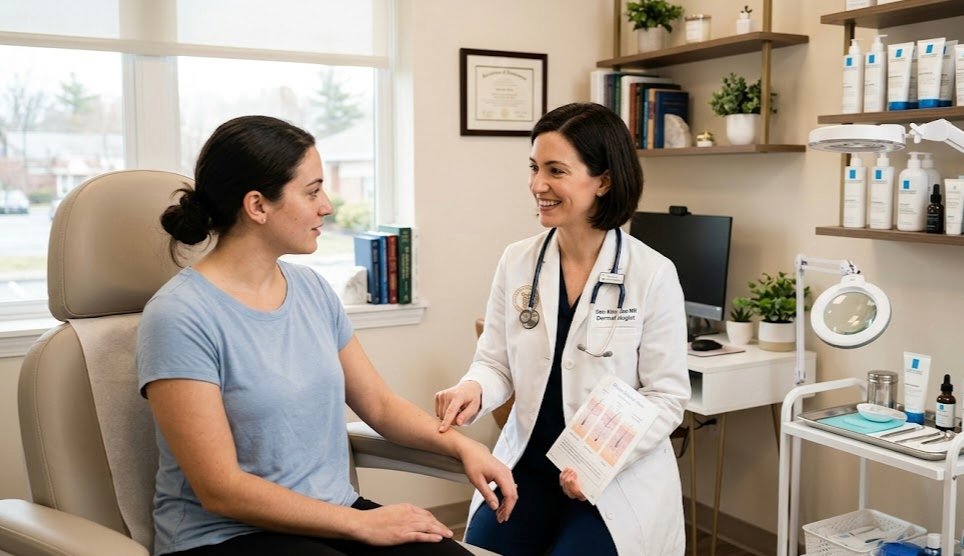
A typical dermatology appointment begins with a review of your health history, current medications, and the specific skin concerns that brought you in. The dermatologist will then perform a physical examination of the affected area and often a full-body skin check if you have not had one recently.
Depending on what is found, the appointment may result in:
- A diagnosis and treatment plan for an identified condition
- A prescription for a topical, oral, or injectable medication
- A biopsy, which involves removing a small sample of tissue for laboratory analysis
- A referral for a follow-up procedure
- Reassurance that a concerning area is benign, combined with guidance on monitoring
Most standard appointments are relatively brief typically 15 to 30 minutes but the quality of the interaction depends significantly on how well-prepared you are with your history and questions.
Building a Home Skin Care Routine That Supports Your Dermatology Treatment
What you do at home between dermatology appointments has a major impact on your skin health. A consistent, appropriate daily skin care routine supports medical treatment, helps prevent new issues from developing, and keeps your skin functioning at its best.
The foundation of any good home skin care routine includes:
1. A Gentle Cleanser
Choose a cleanser suited to your skin type one that removes impurities effectively without stripping the skin barrier. For most people dealing with dermatological conditions, fragrance-free, non-foaming cleansers are the safest choice.
2. Targeted Treatment Products
If your dermatologist has prescribed a topical treatment such as a retinoid, antibiotic cream, or steroid follow the application instructions carefully. Do not use over-the-counter actives (like strong acids or exfoliants) without checking with your dermatologist first, as they may interact with or undermine prescribed treatments.
3. A Moisturizer Suited to Your Skin Type
Moisturizing is essential for almost every skin type and condition. For eczema, psoriasis, and post-procedure recovery, a thick, fragrance-free emollient is typically recommended. For acne-prone skin, a lightweight non-comedogenic moisturizer is more appropriate.
4. Daily Sunscreen
This is non-negotiable from a dermatological perspective. Sun protection is the single most evidence-backed measure for preventing skin cancer, reducing premature aging, and supporting recovery from almost any skin condition or procedure. A broad-spectrum SPF 30 or higher applied every morning is the standard recommendation.
For guidance on natural ingredients and home care practices that support healthier skin, read our guide on Natural Ingredients That Can Support Healthier Looking Skin.
Common Skin Conditions and Home Care Tips
Acne
For mild to moderate acne at home, keeping the skin clean, avoiding heavy or pore-clogging products, and using ingredients like salicylic acid (BHA) or benzoyl peroxide can help. However, persistent or severe acne benefits significantly from professional evaluation, as prescription treatments are far more effective.
Dry and Sensitive Skin
Daily moisturizing with ceramide-rich or shea butter-based products, avoiding hot showers, and switching to a gentle cleanser can make a significant difference. For a detailed guide on managing dry skin at home, read our article on Dry Skin Care Habits That Support Long-Lasting Hydration.
Uneven Skin Texture
Consistent gentle exfoliation, daily moisturizing, and the use of proven actives like niacinamide and retinol can visibly improve skin texture over time. For a full breakdown of how to address rough or uneven skin, read our guide on How to Get Rid of Skin Texture for Smoother Skin.
Visible Pores
Salicylic acid cleansers, niacinamide serums, and consistent sun protection are the most effective home-based approaches to minimizing the appearance of pores. For a step-by-step home routine, read our guide on Build a Simple Routine to Minimize Visible Pores.
When to See a Dermatologist vs. Managing at Home
Many skin concerns can be managed effectively with a good home routine and over-the-counter products. But there are clear situations where professional evaluation is the right step.
See a dermatologist if:
- A mole has changed in size, shape, color, or texture
- You notice a new growth or lesion that is unusual in appearance
- A skin condition has persisted for more than a few weeks without improvement
- Over-the-counter treatments are not working
- Your skin condition is significantly affecting your quality of life
- You have a family or personal history of skin cancer and have not had a recent skin check
- You experience sudden or severe skin reactions
Do not delay seeing a dermatologist for concerning skin changes. Early evaluation is always better than waiting and hoping something resolves on its own.
Choosing the Right Dermatologist in Peabody
For residents of Peabody and the North Shore area, there are several practical considerations when choosing a dermatologist:
Check whether the practice is accepting new patients availability varies and some established practices have waiting lists.
Consider the range of services offered if you may need both medical and cosmetic services, a practice that covers both is more convenient.
Check insurance coverage confirm that the practice accepts your insurance plan before scheduling.
Look at patient reviews platforms like Healthgrades, Yelp, and Google provide patient feedback that can give a sense of the overall experience and quality of care.
Ask about telehealth options many dermatology practices now offer virtual consultations for follow-up appointments and minor concerns, which can save time.
Final Thoughts
Skin health is an important part of overall health, and the dermatology practices in Peabody, MA offer comprehensive services to support both medical and cosmetic skin concerns. Whether you are visiting for a routine skin check, seeking treatment for a chronic condition, or exploring cosmetic options, understanding what to expect and how to care for your skin at home makes the entire experience more productive.
Combined with a consistent daily skin care routine and healthy lifestyle habits, professional dermatological care is one of the most effective investments you can make in the long-term health and appearance of your skin.
For more skin care tips, guides, and natural health information, explore the full Skin Care section on Wellhealthcare.