Introduction
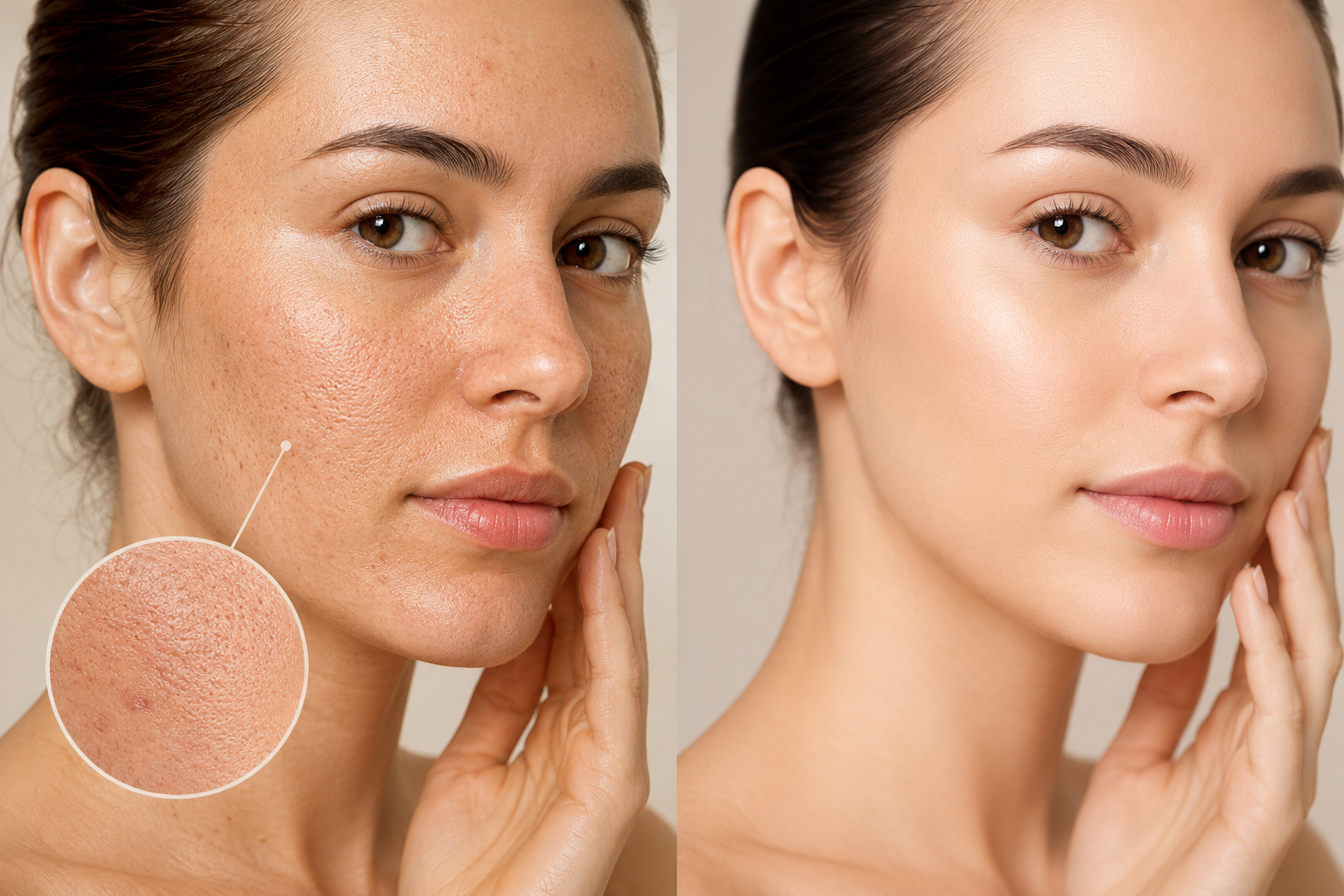
Visible pores are one of the most common skin concerns people bring up when talking about their complexion. Whether they appear on the nose, cheeks, or chin, enlarged-looking pores can make the skin seem rough, uneven, and less smooth than we would like. The good news is that while you cannot actually shrink your pores they do not have muscles that open and close you can absolutely make them appear significantly smaller with the right routine.
Pore size is largely determined by genetics, skin type, and age. But how visible they appear is directly influenced by your daily skincare habits. Clogged pores stretch and become more noticeable. Sun damage over time reduces collagen and makes pores look wider. Excess oil production makes pores appear larger. All of these are things a well-designed routine can address.
This article walks you through exactly how to build a simple, consistent routine that targets the root causes of visible pores and keeps them looking as minimal as possible.
Why Pores Become More Visible
Before building a routine, it helps to understand what makes pores appear larger than they actually are:
Clogged pores are the most common culprit. When dead skin cells, oil, and debris build up inside a pore, it stretches the opening and makes it look bigger. This is also how blackheads and whiteheads form.
Excess sebum production means more oil filling the pores, which makes them more visible, especially in the T-zone area (forehead, nose, and chin).
Sun damage over time breaks down collagen around the pores. Without this structural support, the skin becomes looser and pores appear wider.
Dehydration causes the skin to overcompensate by producing more oil, which in turn makes pores look more prominent.
Aging naturally reduces collagen and elastin levels, reducing the skin’s ability to keep pores looking tight and compact.
A good pore-minimizing routine addresses all of these factors consistently over time.
Step 1 Cleanse Twice Daily With the Right Formula
The foundation of any pore-minimizing routine is keeping them clean. Pores that are free of buildup naturally appear smaller. Cleansing twice a day morning and evening removes the oil, dead skin cells, sweat, and environmental debris that accumulate and stretch pores over time.
For oily or combination skin (most common with visible pore concerns), a gel or foam cleanser containing salicylic acid is particularly helpful. Salicylic acid is a BHA (beta hydroxy acid) that is oil-soluble, meaning it can actually penetrate inside the pore and dissolve the buildup from within. Even a low percentage of 0.5% to 2% used daily makes a meaningful difference over time.
For dry or sensitive skin with visible pores, a gentle hydrating cleanser without active acids is safer. Over-drying the skin triggers more oil production, which worsens pores.
Key cleansing habits:
- Use lukewarm water — hot water is irritating and can worsen oil production
- Cleanse for at least 30 to 60 seconds to allow the product to work
- Pat dry gently — never rub
- Never sleep with makeup or sunscreen on; this is one of the fastest ways to clog pores overnight
Step 2 Exfoliate Regularly to Keep Pores Clear
Dead skin cell buildup is one of the biggest contributors to visible pores. Regular exfoliation removes this buildup, keeps the pore opening clear, and allows other skincare products to absorb properly.
Chemical exfoliation is more effective and gentler for pore concerns than physical scrubs, which can actually push debris deeper into pores and cause irritation.
The best chemical exfoliants for minimizing pores:
Salicylic Acid (BHA) The gold standard for pore concerns. It dissolves oil and debris inside the pore. Use it two to three times a week as a toner or serum.
Glycolic Acid (AHA) Works on the skin surface to smooth texture and reduce the appearance of pores over time. Good for normal to dry skin.
Niacinamide Not strictly an exfoliant but works alongside them to regulate sebum production and visibly tighten the appearance of pores with consistent use.
Start with exfoliation two to three times per week and monitor how your skin responds. Over-exfoliating can damage the skin barrier and actually worsen pores by triggering more oil production.
Step 3 Use a Niacinamide Serum
Niacinamide (vitamin B3) is one of the most well-supported ingredients for minimizing the visible appearance of pores. It works through several mechanisms simultaneously — it regulates sebum production, strengthens the skin barrier, improves skin texture, and has been shown in multiple studies to visibly reduce the appearance of enlarged pores with consistent use.
It is also exceptionally well-tolerated by almost all skin types, including sensitive skin, and can be used morning and evening without irritation.
How to use it: Apply a niacinamide serum after cleansing and before moisturizer. A concentration of 5% to 10% is the most commonly used and well-supported range. Higher is not always better 5% is effective for most people.
Niacinamide works best when used consistently over several weeks. Most people notice visible improvement in pore appearance within four to eight weeks of daily use.
Step 4 Moisturize Even for Oily Skin
Many people with visible pore concerns have oily skin and skip moisturizer thinking it will make things worse. This is one of the most common skincare mistakes and one that actually makes pores more visible over time.
When the skin is dehydrated, it overproduces oil to compensate. This extra oil fills and stretches the pores. A lightweight, non-comedogenic moisturizer keeps the skin properly hydrated, tells it to stop overproducing oil, and ultimately makes pores appear less prominent.
What to look for in a moisturizer for pore-prone skin:
- Non-comedogenic labeling (won’t clog pores)
- Lightweight gel or fluid textures for oily skin
- Ingredients like hyaluronic acid, glycerin, and niacinamide
- Fragrance-free formulations to reduce irritation risk
Even if your skin feels oily, applying a lightweight moisturizer every day is a non-negotiable step in a pore-minimizing routine. The combination of proper hydration and sebum regulation is key to long-term results.
Step 5 Apply Sunscreen Every Morning
Sun damage is a long-term but very real contributor to enlarged-looking pores. UV rays break down collagen over time, which reduces the structural support around each pore. As collagen decreases, pores lose their tight, compact appearance and begin to look wider and more open.
Daily SPF use a broad-spectrum SPF 30 or higher every single morning protects this collagen and prevents the gradual widening of pores that comes with cumulative sun exposure.
For oily and pore-prone skin, look for lightweight, non-comedogenic sunscreen formulas. Many modern mineral and hybrid sunscreens have a matte finish that also helps reduce the oily shine that makes pores more visible throughout the day.
Sunscreen is non-negotiable in a pore routine — not just for anti-aging but for actively preventing pore size from worsening. For more on building a complete natural skincare routine, read our guide on Best Natural Skincare Tips for Glowing Skin.
Step 6 Add Retinol to Your Evening Routine
Retinol is one of the most powerful ingredients available for visibly improving pore appearance over time. It works by speeding up cell turnover, preventing the dead skin cell buildup that clogs and stretches pores, and stimulating collagen production to provide better structural support around each pore.
Used consistently over several months, retinol produces some of the most noticeable and lasting improvements in pore appearance of any skincare ingredient.
How to use retinol for pores:
- Start with a low concentration — 0.025% to 0.1% — and increase gradually
- Use it at night only, as it increases sun sensitivity
- Apply after cleansing, before moisturizer
- Begin with two to three nights per week and increase as your skin adjusts
- Always follow the next morning with sunscreen
Retinol requires patience. Results typically become visible after eight to twelve weeks of consistent use. Some initial flaking or dryness is normal during the adjustment period.
Step 7 Use a Clay Mask Once a Week
A weekly clay mask is an excellent supporting habit for minimizing pores. Clay particularly kaolin and bentonite works by absorbing excess oil and drawing out impurities from inside the pores. After a clay mask, pores often appear visibly tighter and less prominent.
Clay masks should be used as a weekly treatment, not daily. Using them too often can strip the skin barrier and actually increase oil production.
How to use a clay mask:
- Apply a thin, even layer to the face after cleansing
- Leave on for ten to fifteen minutes — do not let it dry completely as this can be too drying
- Rinse with lukewarm water and follow with moisturizer
- Use once a week, or twice a week if your skin tolerates it well
Look for masks that also contain ingredients like salicylic acid, niacinamide, or charcoal for additional pore-clearing benefits.
Your Complete Simple Pore-Minimizing Routine
Morning:
- Gentle or salicylic acid cleanser
- Niacinamide serum
- Lightweight non-comedogenic moisturizer
- Broad-spectrum SPF 30+ sunscreen
Evening:
- Gentle cleanser (double cleanse if wearing makeup or SPF)
- BHA exfoliant or niacinamide serum (alternate on different nights)
- Retinol (2–3 nights per week when starting)
- Lightweight moisturizer
Weekly:
- Clay mask once a week after cleansing, before moisturizer
Best Ingredients for Minimizing Visible Pores
| Ingredient | How It Helps Pores |
|---|---|
| Salicylic Acid (BHA) | Clears inside the pore, dissolves oil and debris |
| Niacinamide | Regulates sebum, tightens pore appearance |
| Retinol | Boosts collagen, prevents buildup, refines texture |
| Glycolic Acid (AHA) | Exfoliates surface, smooths skin around pores |
| Clay (Kaolin/Bentonite) | Absorbs excess oil, draws out impurities |
| Hyaluronic Acid | Hydrates without clogging, reduces oil overproduction |
| SPF | Protects collagen, prevents long-term pore widening |
Habits That Make Pores Worse
Alongside building a good routine, it is equally important to avoid habits that undo the progress:
Not removing makeup before bed is one of the fastest ways to stretch and clog pores. Always cleanse thoroughly at night.
Using heavy, pore-clogging products like thick creams, coconut oil on the face, or heavily fragranced products can block pores and worsen their appearance.
Touching your face frequently transfers oil and bacteria onto the skin, contributing to congestion.
Over-exfoliating damages the skin barrier and triggers more oil production the opposite of what you want for pores.
Skipping moisturizer leads to dehydration, which triggers excess oil and ultimately makes pores more visible.
For a broader look at habits that commonly damage skin health, read our guide on Understanding Uneven Skin Texture and Habits That Support Smoother Looking Skin.
How Long Until You See Results?
Setting realistic expectations is important. Pore minimization is not an overnight process. Here is a general timeline of what to expect:
Week 1–2: Skin may feel cleaner and look less congested after cleansing and exfoliating regularly.
Week 3–4: With consistent niacinamide use, oil production begins to regulate and pores may appear slightly less prominent.
Month 2–3: Retinol and consistent exfoliation begin to show more noticeable improvements in texture and pore appearance.
Month 3–6: Significant and lasting improvement in overall pore visibility with full routine consistency.
The key message is patience and consistency. The routine does not need to be complicated or expensive — it needs to be practiced daily.
Final Thoughts
You cannot change the size of your pores, but you have a great deal of control over how visible they appear. The right combination of regular cleansing, chemical exfoliation, niacinamide, sun protection, and retinol practiced consistently over time can make a very real and visible difference in the appearance of pores.
Keep the routine simple, introduce new actives one at a time, and give each step time to work. Skin responds to consistency above all else.
For more tips on building effective skincare routines for every concern, explore the full Skin Care section on Wellhealthcare.