
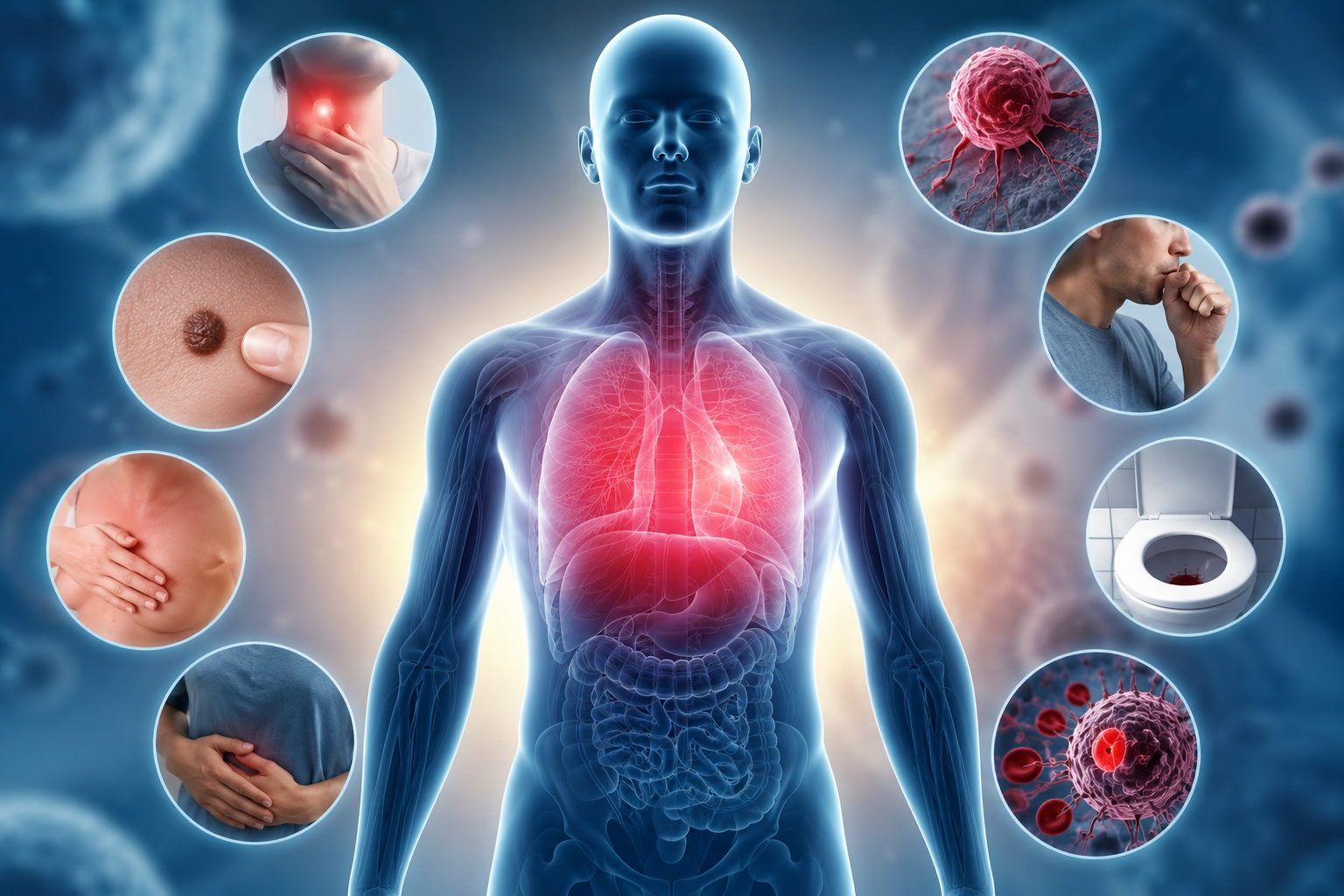
Cancer is one of the most serious health conditions worldwide, but early detection can make a huge difference in treatment success and survival rates. The challenge is that many early signs of cancer can seem harmless or similar to common illnesses. That’s why understanding the warning signs your body may give is extremely important.
This article explains the early symptoms of cancer that should never be ignored, along with why they happen and when to seek medical help.
Why Early Detection Matters
Cancer develops when abnormal cells begin to grow uncontrollably in the body. In the early stages, these changes may not cause obvious pain or discomfort. However, as the disease progresses, it begins to affect normal body functions.
Detecting cancer early means:
- More treatment options are available
- Higher chance of successful recovery
- Less aggressive treatments may be needed
- Slower or no spread to other organs
That’s why paying attention to your body’s signals is crucial.
1. Unexplained Weight Loss
Sudden weight loss without dieting or exercise is one of the most common early warning signs of several cancers, including stomach, pancreatic, lung, and esophageal cancer.
If you lose more than 5–10 kg without any lifestyle changes, it should not be ignored. Cancer cells can alter the body’s metabolism, causing rapid weight loss even when you are eating normally.
2. Persistent Fatigue
Feeling tired after a long day is normal, but cancer-related fatigue is different. It is extreme tiredness that does not improve with rest.
This type of fatigue may occur in cancers like:
- Leukemia
- Colon cancer
- Stomach cancer
Cancer can cause fatigue by draining the body’s energy, affecting red blood cell production, or releasing toxins into the bloodstream.
3. Changes in Skin or Moles
Skin changes are often an early indicator of skin cancer. Watch for:
- New moles or growths
- Changes in color, shape, or size of existing moles
- Sores that do not heal
- Yellowing, darkening, or redness of skin
A simple rule many doctors suggest is the “ABCDE” rule for moles:
- Asymmetry
- Border irregularity
- Color variation
- Diameter larger than a pencil eraser
- Evolving changes
If you notice any of these, get checked immediately.
4. Persistent Pain
Pain is usually a sign that something is wrong in the body. While not all pain is cancer-related, ongoing or unexplained pain should be taken seriously.
Examples include:
- Headaches that don’t go away (possible brain tumors)
- Back pain (possible bone or pancreatic cancer)
- Abdominal pain (digestive cancers)
Pain caused by cancer often worsens over time and does not respond well to regular painkillers.
5. Unusual Bleeding or Discharge
Unexplained bleeding is a major warning sign and should never be ignored. It may appear as:
- Blood in urine (possible bladder or kidney cancer)
- Blood in stool (possible colon cancer)
- Coughing up blood (possible lung cancer)
- Abnormal vaginal bleeding (possible cervical or uterine cancer)
Any unusual discharge or bleeding should be evaluated by a healthcare professional immediately.
6. Persistent Cough or Hoarseness
A cough that lasts more than 3 weeks without improvement can be a sign of lung cancer or throat cancer.
Other warning signs include:
- Hoarseness or voice changes
- Chest pain while coughing
- Shortness of breath
Smokers are at higher risk, but non-smokers should also not ignore these symptoms.
7. Difficulty Swallowing
Feeling like food is stuck in your throat or chest can be an early symptom of throat, esophageal, or stomach cancer.
This may start mildly but gradually worsen over time, making eating difficult or painful.
8. Lumps or Swelling
Unusual lumps anywhere in the body should always be checked. Common areas include:
- Breast
- Neck
- Testicles
- Underarms
Not all lumps are cancerous, but painless, growing, or hard lumps are especially concerning.
9. Changes in Bowel or Bladder Habits
Long-term changes in digestion or urination may signal internal cancers.
Watch for:
- Frequent diarrhea or constipation
- Narrow or unusual stools
- Blood in stool or urine
- Pain while urinating
These symptoms can be linked to colon, bladder, or prostate cancers.
10. Non-Healing Sores
A wound or sore that does not heal within a normal time frame can be a warning sign of skin cancer or oral cancer.
Healthy wounds typically improve within a few weeks. If healing is delayed or the sore keeps returning, it should be examined.
When to See a Doctor
Not every symptom means cancer. Many conditions can cause similar issues. However, you should consult a doctor if:
- Symptoms last more than 2–3 weeks
- Symptoms get worse over time
- Multiple symptoms appear together
- You feel something is “not normal” in your body
Early medical advice can make a major difference in diagnosis and treatment.
Final Thoughts
Cancer does not always show obvious signs in the beginning, but the body often gives subtle warnings. Paying attention to unusual changes like unexplained weight loss, persistent fatigue, abnormal bleeding, or lumps can help detect problems early.
The key is not to panic but to stay aware. Early detection saves lives, and regular checkups combined with a healthy lifestyle are your best defense against cancer.