Introduction
Wisdom teeth are the last adult teeth that usually appear later than other teeth. Many people start noticing changes in the back of their mouth and wonder whether those changes are signs of wisdom teeth coming in.
For some people, wisdom teeth appear with very few symptoms. Others may experience temporary discomfort, pressure, or changes around the gums.
Understanding the early signs can help people know what to expect and maintain better oral health habits.
What Are Wisdom Teeth?
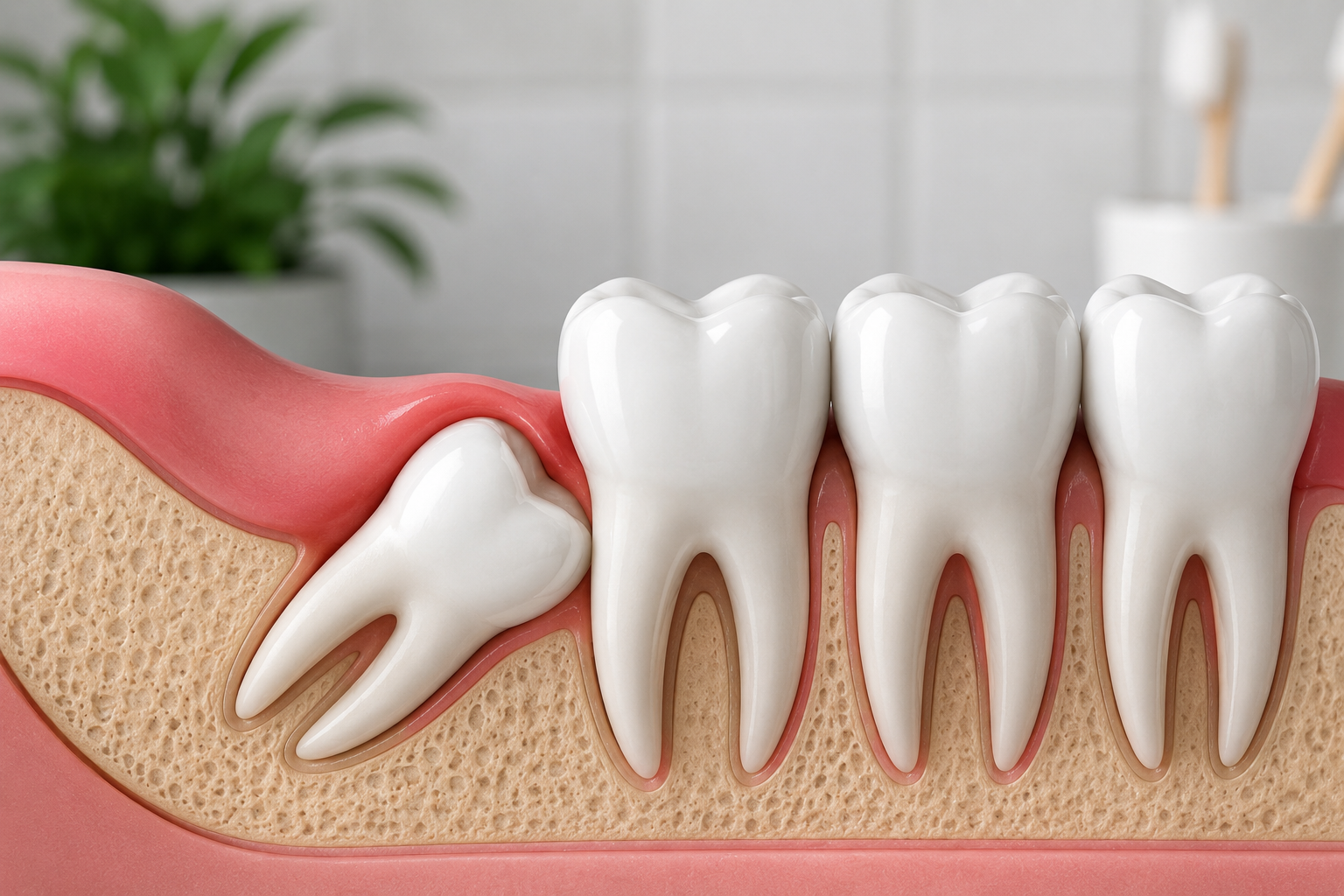
Wisdom teeth are the final set of molars located at the back of the mouth.
Most people develop:
- Four wisdom teeth
- One in each back corner
They often appear during late teenage years or early adulthood, although timing varies from person to person.
Mild Gum Discomfort
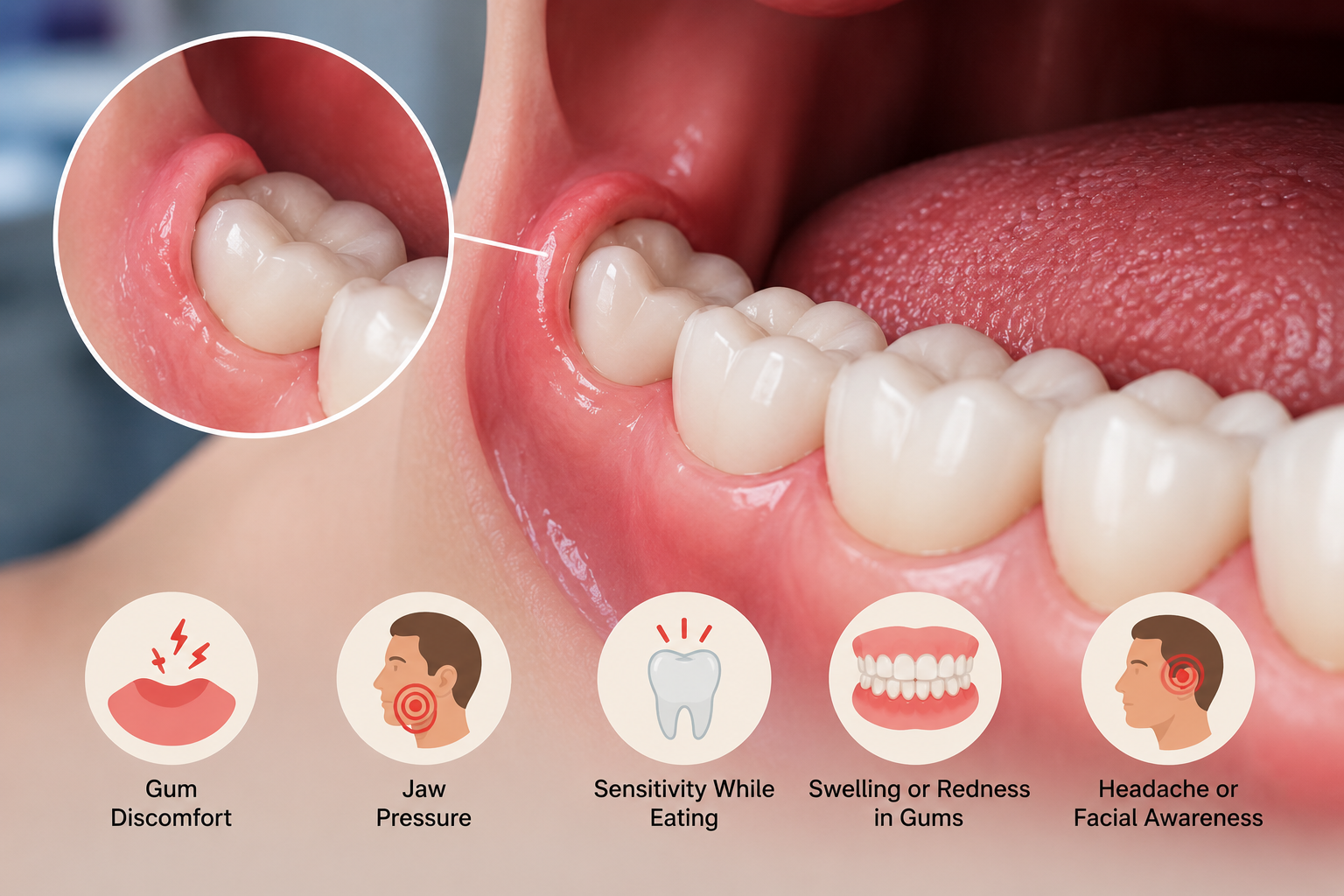
One of the earliest signs people notice is mild discomfort near the back gums.
You may notice:
- Tender feeling
- Slight pressure
- Temporary sensitivity
This does not automatically mean a problem exists, but changes in the back gums often become more noticeable as wisdom teeth begin developing.
Swelling Around the Back of the Mouth
Some people notice mild swelling in the gum area behind the last visible molars.
Possible experiences include:
- Feeling of fullness
- Slight gum irritation
- Temporary sensitivity while chewing
Maintaining daily oral care habits may help keep the mouth comfortable.
Jaw Pressure or Tight Feeling
As wisdom teeth develop, some people report feeling mild pressure near the jaw area.
You may notice:
- Tight feeling while opening the mouth
- Minor pressure in the back teeth area
- Temporary awareness while chewing
Jaw sensations vary between individuals.
Increased Sensitivity While Eating
Some people become more aware of the back part of their mouth during meals.
Common experiences:
- Sensitivity with hard foods
- Mild chewing discomfort
- Temporary gum awareness
Choosing softer foods temporarily may feel more comfortable.
Changes in Gum Appearance
You may notice small visual changes around the gum area.
Possible signs:
- Slight raised appearance
- Mild redness
- Temporary irritation
Good oral hygiene habits remain important.
You can also read:
https://wellhealthcare.net/how-to-improve-oral-health-naturally/
Difficulty Cleaning Back Teeth
As changes occur in the back of the mouth, cleaning can feel slightly different.
Helpful habits:
- Brush gently
- Clean thoroughly
- Use proper oral care routines
- Avoid excessive pressure
Keeping the area clean supports better oral hygiene.
Temporary Headache or Facial Awareness
Some people notice temporary facial awareness or mild tension during dental changes.
Possible experiences:
- Mild jaw tiredness
- Awareness near cheeks
- Temporary discomfort
If symptoms become severe or unusual, professional evaluation may help.
When to Consider a Dental Checkup
Dental evaluation may be useful if someone experiences:
- Ongoing discomfort
- Difficulty opening the mouth
- Significant swelling
- Difficulty eating
- Persistent oral concerns
Routine dental visits support healthy teeth and gums.
You can also read:
https://wellhealthcare.net/best-daily-habits-for-healthy-teeth/
Tips for Managing Daily Comfort
Simple habits may help support comfort:
- Drink enough water
- Maintain oral hygiene
- Avoid overly hard foods
- Continue gentle brushing
- Follow healthy eating habits
Small daily habits often support better dental wellness.
FAQ Section
At what age do wisdom teeth usually come in?
Many people notice wisdom teeth during late teenage years or early adulthood.
Do wisdom teeth always hurt?
No. Some people experience very few noticeable symptoms.
Is swelling normal?
Mild temporary gum changes may happen, but persistent concerns should be evaluated.
Can wisdom teeth appear without symptoms?
Yes, some people experience little to no discomfort.
How do I know if wisdom teeth are developing?
Changes in the back gums, pressure, or increased awareness may be early signs.
Conclusion
The first signs of wisdom teeth coming in can vary from person to person. Mild gum changes, temporary sensitivity, jaw pressure, and changes near the back teeth are commonly noticed experiences.
Maintaining good oral hygiene and paying attention to changes may help support healthy teeth and daily comfort over time.