Introduction
When most people think about their teeth, they focus on their front teeth for appearance or their back molars for chewing. But the canine teeth — those slightly pointed teeth sitting just beside the front incisors — play a surprisingly important and often underappreciated role in oral health and everyday function.
Whether you are curious about what canine teeth actually do, why they look the way they do, or how to take better care of them, this guide covers everything you need to know in a clear and straightforward way.
What Are Canine Teeth?
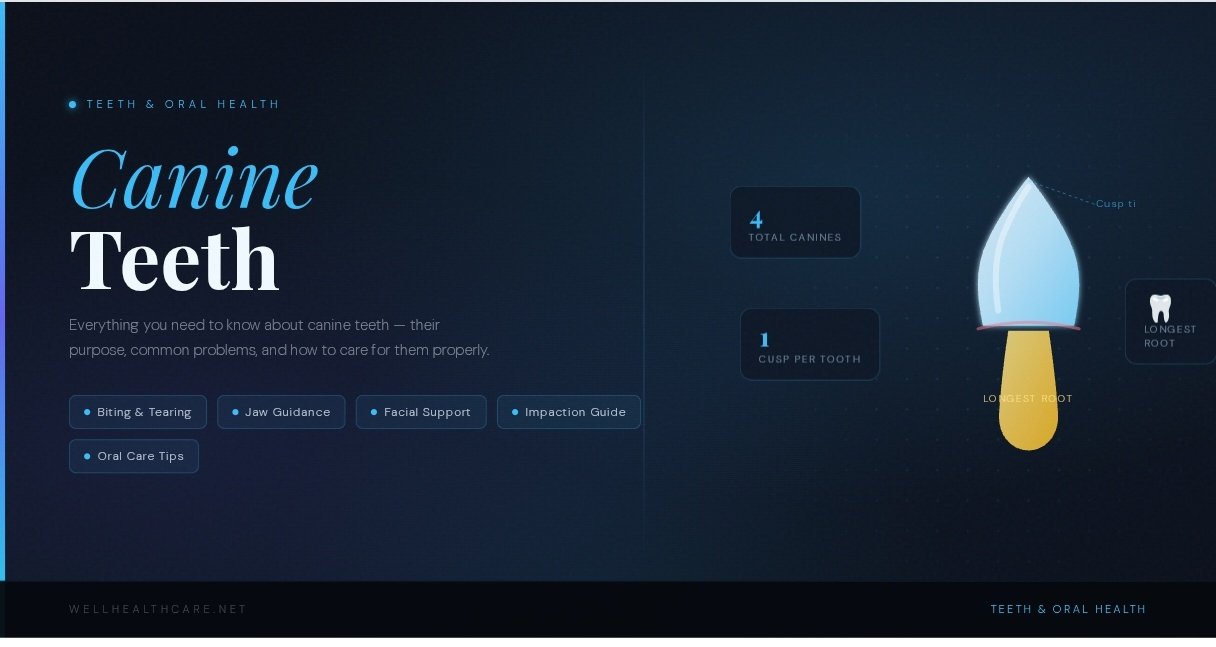
Canine teeth are the four pointed teeth located in both the upper and lower jaws, one on each side. They sit between the lateral incisors (the teeth next to your two front teeth) and the first premolars. Their slightly sharp, pointed shape sets them apart from every other tooth in your mouth.
In humans, the full set of adult teeth includes:
- 8 incisors — the flat front teeth for biting
- 4 canines — the pointed teeth for tearing and guiding
- 8 premolars — the transitional teeth between canines and molars
- 12 molars (including wisdom teeth) — the broad back teeth for grinding
The four canine teeth are also sometimes referred to as cuspids, because they each have a single cusp — the pointed tip. In everyday language, many people call the upper canines “eye teeth,” a term that comes from their position directly below the eye socket.
Why Are Canine Teeth Pointed?
The distinctive pointed shape of canine teeth is not accidental — it is a direct result of their function. Unlike the flat edges of incisors or the broad surfaces of molars, canines are shaped to grip and tear food. This shape is preserved across virtually all mammals, including humans, because it remains functionally useful.
Canines evolved to help our ancestors tear through tougher foods like meat and fibrous plant material. While modern diets are far softer and more processed than those of early humans, the canine teeth still serve important mechanical functions in how we bite, chew, and stabilize the jaw.
The Functions of Canine Teeth
Canine teeth do more than most people realize. Here are their key roles:
1. Tearing and Cutting Food
The primary mechanical function of canines is to grip and tear food. When you bite into something firm — an apple, a piece of bread, or meat — your canines do a significant portion of the initial cutting work before the food is passed back to the premolars and molars for grinding.
2. Guiding Jaw Movement
This is perhaps the most important function that many people are unaware of. Canine teeth play a critical role in guiding the movement of the jaw during chewing, particularly during the side-to-side motion called lateral excursion.
When the jaw moves sideways, the upper and lower canine teeth make contact and guide the movement in a way that protects the back teeth from excessive lateral forces. This is called canine guidance or canine-protected occlusion. Without healthy canines, other teeth — particularly the molars — can be subjected to damaging forces that lead to wear, cracking, or joint problems over time.
3. Supporting Facial Structure
Canine teeth have the longest roots of any tooth in the mouth. These deep roots provide strong anchoring points that support the surrounding bone and tissue. They also play a role in supporting the appearance of the lips and cheeks from the inside. When canines are lost or missing, it can contribute to a sunken appearance around the corners of the mouth.
4. Aesthetic Role
From an aesthetic standpoint, canines frame the smile. They mark the visual transition from the front teeth — which are highly visible when smiling — to the side teeth. Well-shaped and properly positioned canines give the smile a natural, balanced look. Overly sharp, worn, or discolored canines can noticeably affect the overall appearance of the smile.
Baby Canine Teeth vs. Adult Canine Teeth
Like all teeth, canines come in two sets. The primary (baby) canines typically emerge between 16 and 22 months of age, and the permanent (adult) canines replace them later in childhood.
Upper permanent canines usually erupt between ages 11 and 12.
Lower permanent canines typically emerge slightly earlier, between ages 9 and 10.
The upper canines are particularly well-known for sometimes being the last front teeth to emerge and for occasionally erupting in unusual positions — a condition called canine impaction — which we will discuss in detail shortly.
What Is a Canine Tooth Impaction?
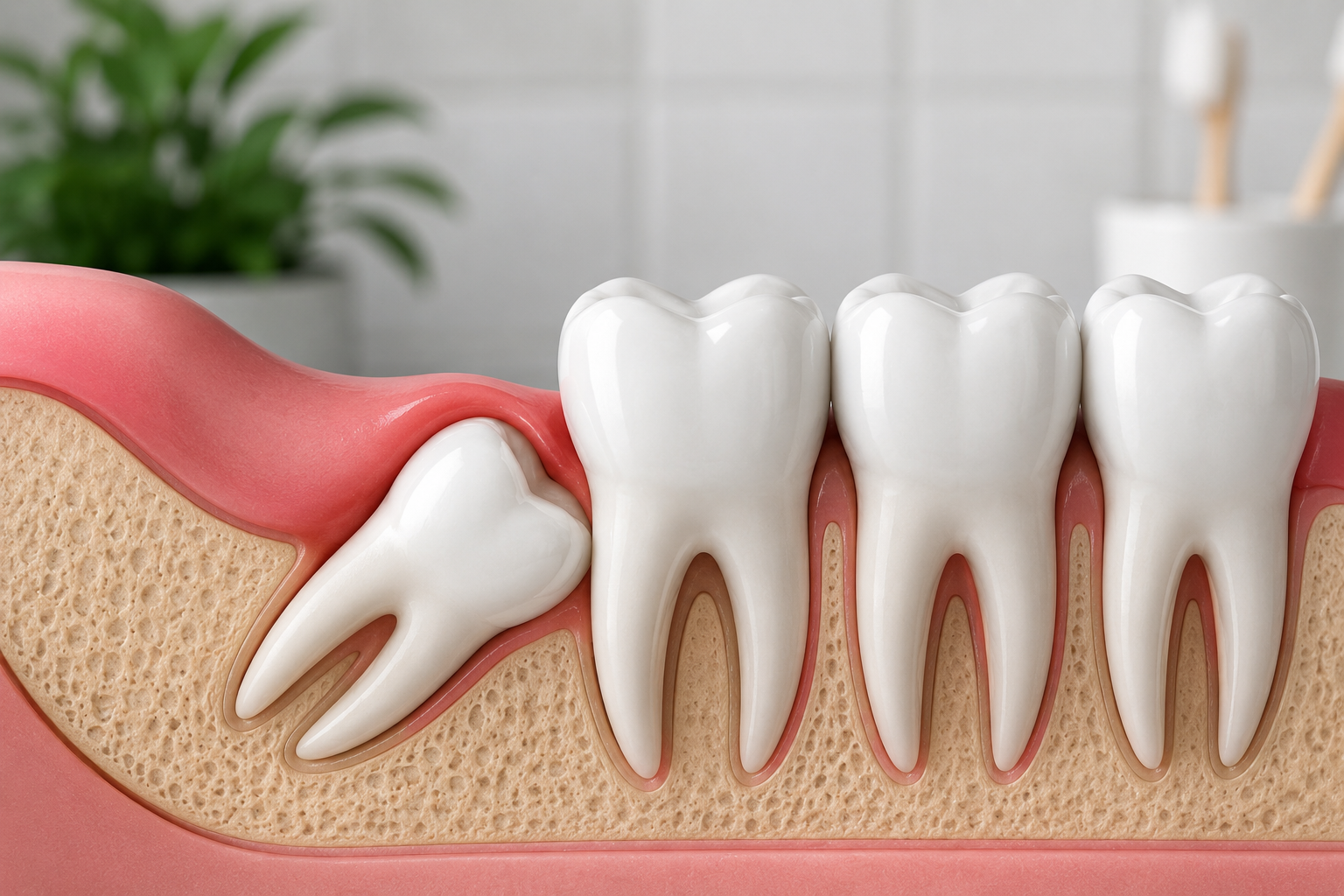
A canine tooth is considered impacted when it fails to emerge properly into its correct position in the dental arch. Among all teeth except wisdom teeth, the upper canine is the most commonly impacted tooth.
Impaction can occur because:
- There is not enough space in the dental arch for the canine to come through
- The canine is angled incorrectly during development
- Other teeth are blocking its path
- A retained baby canine is not falling out at the right time
Impacted canines are typically identified through dental X-rays during routine childhood dental checkups. If left untreated, an impacted canine can cause damage to neighboring teeth, develop cysts, or affect the alignment of the entire dental arch.
Treatment options for impacted canines generally include:
- Orthodontic treatment — creating space in the arch with braces so the canine has room to move into position
- Surgical exposure — a minor surgical procedure to uncover the impacted tooth, followed by orthodontic traction to guide it into place
- Extraction — in cases where the canine cannot be moved into position, extraction followed by a replacement option may be considered
Early detection and intervention lead to much better outcomes. If a child’s canines have not emerged by age 13 or 14, a dental evaluation is recommended.
Common Problems With Canine Teeth
Wear and Flattening
Because canines bear significant biting and guiding forces, they can wear down over time — particularly in people who grind their teeth (a condition called bruxism). A worn canine loses its pointed tip and becomes flatter, which compromises both its function and appearance.
Night guards are often recommended for people who grind to protect the canines and other teeth from excessive wear.
Chipping and Fractures
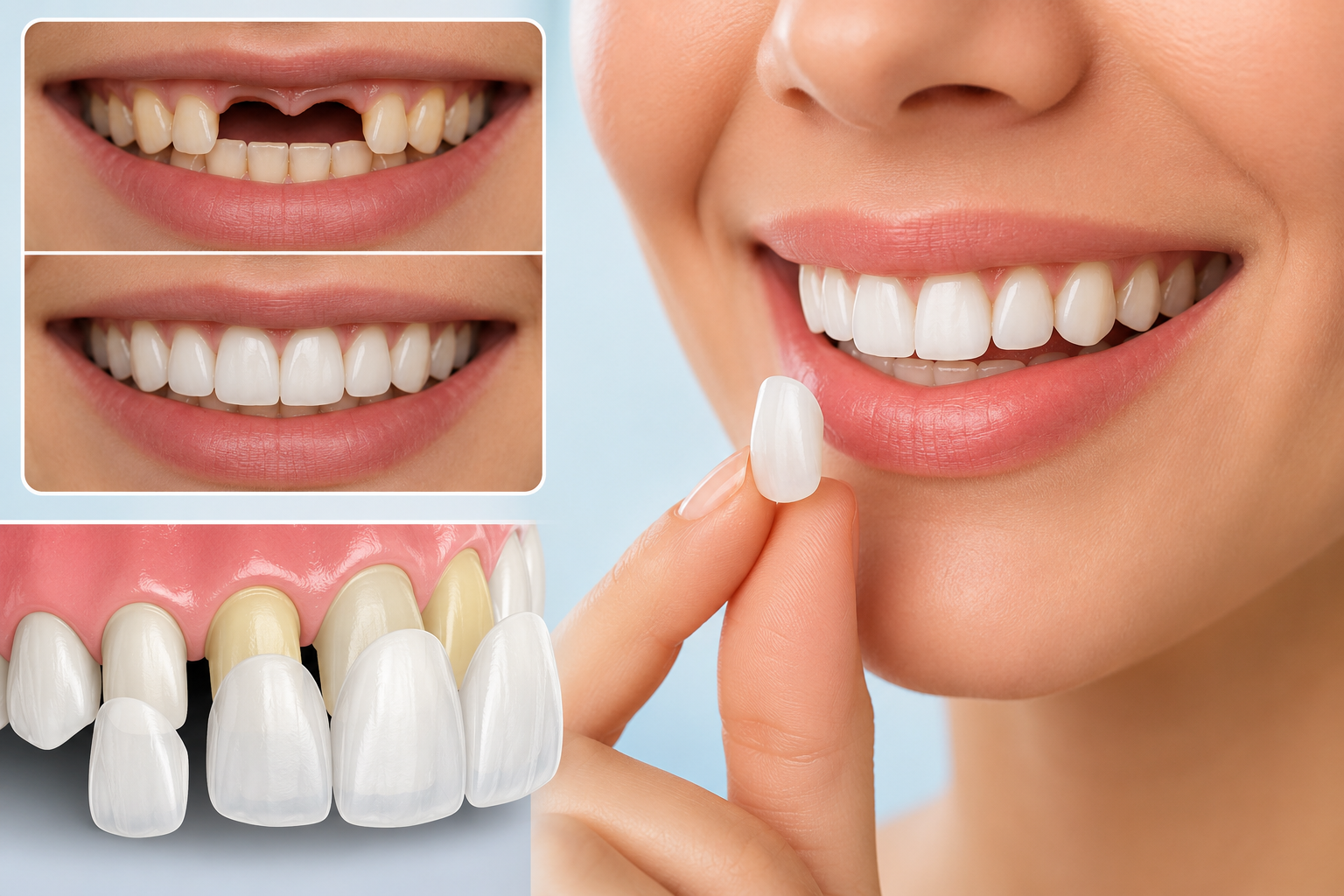
The pointed tip of a canine, while strong, can be vulnerable to chipping — especially from biting on hard objects, sports impacts, or accidents. A chipped canine is often repaired with composite bonding or, in more severe cases, a crown.
Gum Recession Around Canines
Canine teeth are positioned at the corners of the dental arch, making them somewhat prone to gum recession. Brushing too aggressively, particularly with a hard-bristled toothbrush, can wear away the gum tissue around the canines over time, exposing the root surface and leading to sensitivity.
Using a soft-bristled toothbrush and brushing with gentle, circular motions rather than scrubbing side to side significantly reduces recession risk.
Discoloration
Like all teeth, canines can become discolored from coffee, tea, red wine, tobacco, and aging. Professional cleaning and whitening treatments can address surface staining. Deep internal discoloration may require more specialized dental treatment.
Canine Crowding and Misalignment
When there is insufficient space in the dental arch, canines — particularly the upper ones — can erupt in front of or behind the neighboring teeth, giving the classic “fang-like” appearance sometimes called “vampire teeth.” Orthodontic treatment (braces or aligners) can correct this in most cases, often very effectively.
How to Take Care of Your Canine Teeth
Caring for canine teeth is part of caring for your overall oral health, but a few specific practices are worth highlighting given the unique position and function of these teeth.
Brush Gently and Correctly
Because canines sit at the curve of the dental arch, they can be easy to miss or brush too aggressively. Use a soft-bristled toothbrush and angle the bristles at 45 degrees toward the gum line. Brush in small, gentle circular motions rather than hard horizontal strokes. This cleans the gum margin effectively without causing recession.
Brush for a full two minutes, twice a day, ensuring you reach all surfaces of each canine — front, back, and along the gum line.
Floss Daily Around Canine Teeth
The spaces between the canines and their neighboring teeth are common areas for plaque buildup. Daily flossing removes food particles and plaque from these contact points that a toothbrush simply cannot reach. Gum disease and decay often begin in exactly these tight spaces.
Use Fluoride Toothpaste
Fluoride strengthens tooth enamel and protects against decay on all teeth, including the canines. Using a fluoride toothpaste twice daily is one of the simplest and most effective habits for long-term tooth health.
Avoid Using Teeth as Tools
Using canine teeth to open packaging, bite nails, or tear tape puts unnecessary stress on the pointed tip and can lead to chips or cracks. Canines are strong but they are not designed for these tasks.
Protect Canines During Sports
If you play contact sports or any activity where dental impact is possible, wearing a mouthguard is important. A custom-fitted mouthguard from a dentist offers the best protection, but even a standard over-the-counter option is better than nothing.
Visit Your Dentist Regularly
Routine dental checkups allow your dentist to monitor the wear, alignment, and health of your canine teeth and catch problems early. Twice-yearly visits are the standard recommendation for most adults. For more on building healthy oral habits, read our article on Benefits of Tongue Scraping for Better Oral Health.
Canine Teeth and Overall Oral Health
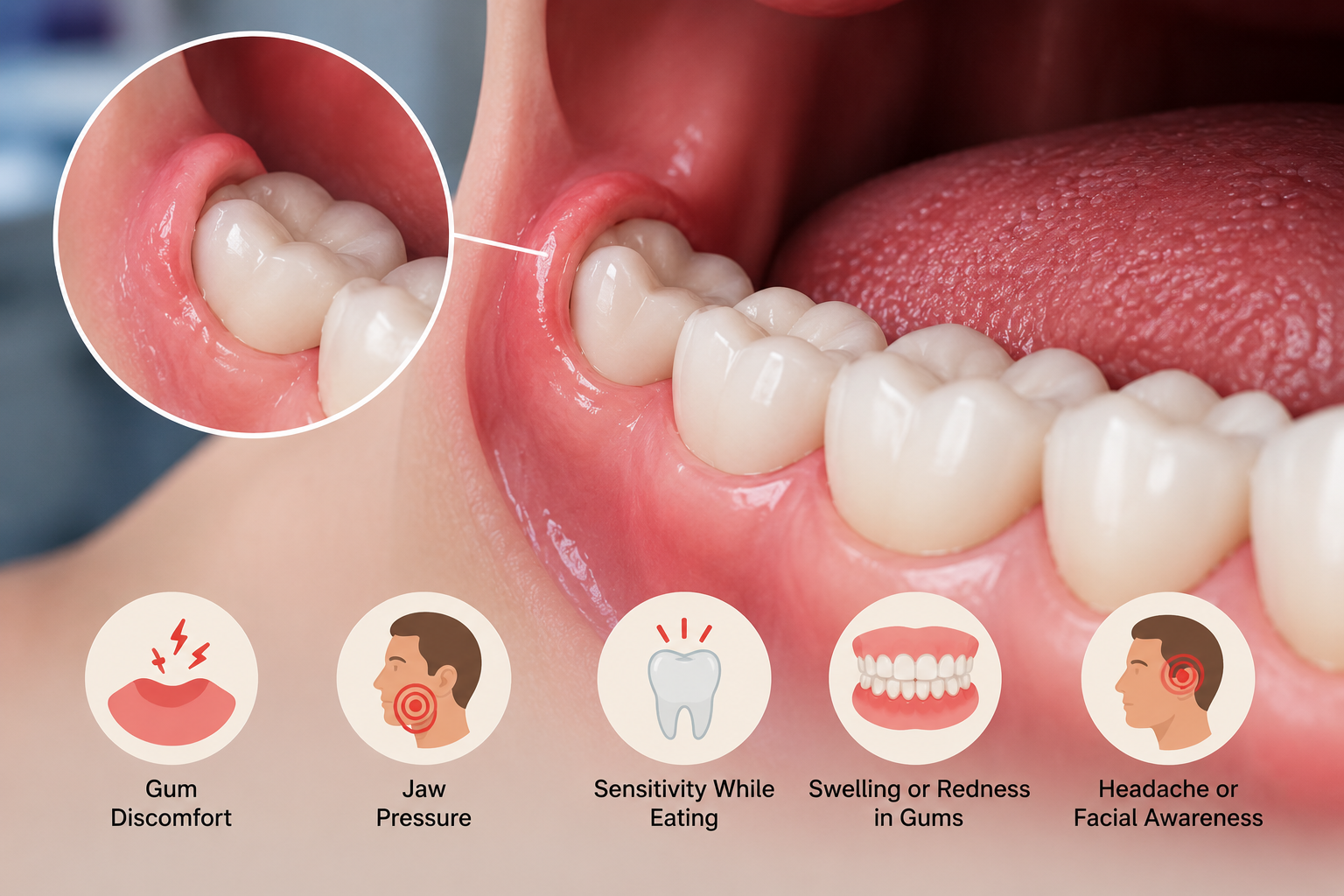
The health of your canine teeth is closely connected to your overall oral health. Because they guide jaw movement, canines that are worn, missing, or improperly positioned can affect how the entire bite functions — leading to uneven stress on other teeth, jaw joint issues, and even headaches or facial muscle tension over time.
Dentists and orthodontists pay particular attention to the canines when evaluating bite function and planning any restorative or orthodontic treatment. Protecting your canines through good daily habits and regular dental visits is one of the most important investments you can make in your long-term oral health.
Quick Facts About Canine Teeth
- Humans have 4 canine teeth — 2 upper, 2 lower
- Canines have the longest roots of any tooth in the mouth
- Upper canines are sometimes called “eye teeth”
- The upper canine is the most commonly impacted tooth after wisdom teeth
- Canines typically last a lifetime with proper care
- They are critical for jaw guidance during chewing
- Loss of canines can affect facial appearance and bite function
Final Thoughts
Canine teeth may not get as much attention as the front teeth when it comes to aesthetics, or the molars when it comes to chewing, but they are among the most structurally and functionally important teeth in your mouth. Their long roots, unique shape, and role in guiding the bite make them irreplaceable in the truest sense.
Caring for your canines through consistent brushing, daily flossing, regular dental visits, and protective habits ensures they remain healthy and functional for life. And if you or your child has concerns about canine positioning or impaction, speaking with a dentist or orthodontist early is always the best course of action.
Healthy canines are the cornerstone of a healthy smile and a well-functioning bite.