Introduction
Missing teeth are far more common than most people realize. According to the American College of Prosthodontists, over 120 million Americans are missing at least one tooth. When this happens, one of the first questions people ask is whether dental veneers can fill the gap and restore their smile quickly.
It is a completely understandable question. Veneers are widely celebrated for transforming smiles covering stains, chips, gaps, and uneven shapes. So it makes sense to wonder whether they could work for a missing tooth too.
The honest, straightforward answer is no dental veneers cannot replace a missing tooth on their own. But that does not mean veneers have no role to play when you are missing teeth. Understanding exactly why veneers do not work as a replacement, what they can do instead, and which treatments actually address missing teeth will help you make the most informed decision about your smile.
What Are Dental Veneers?
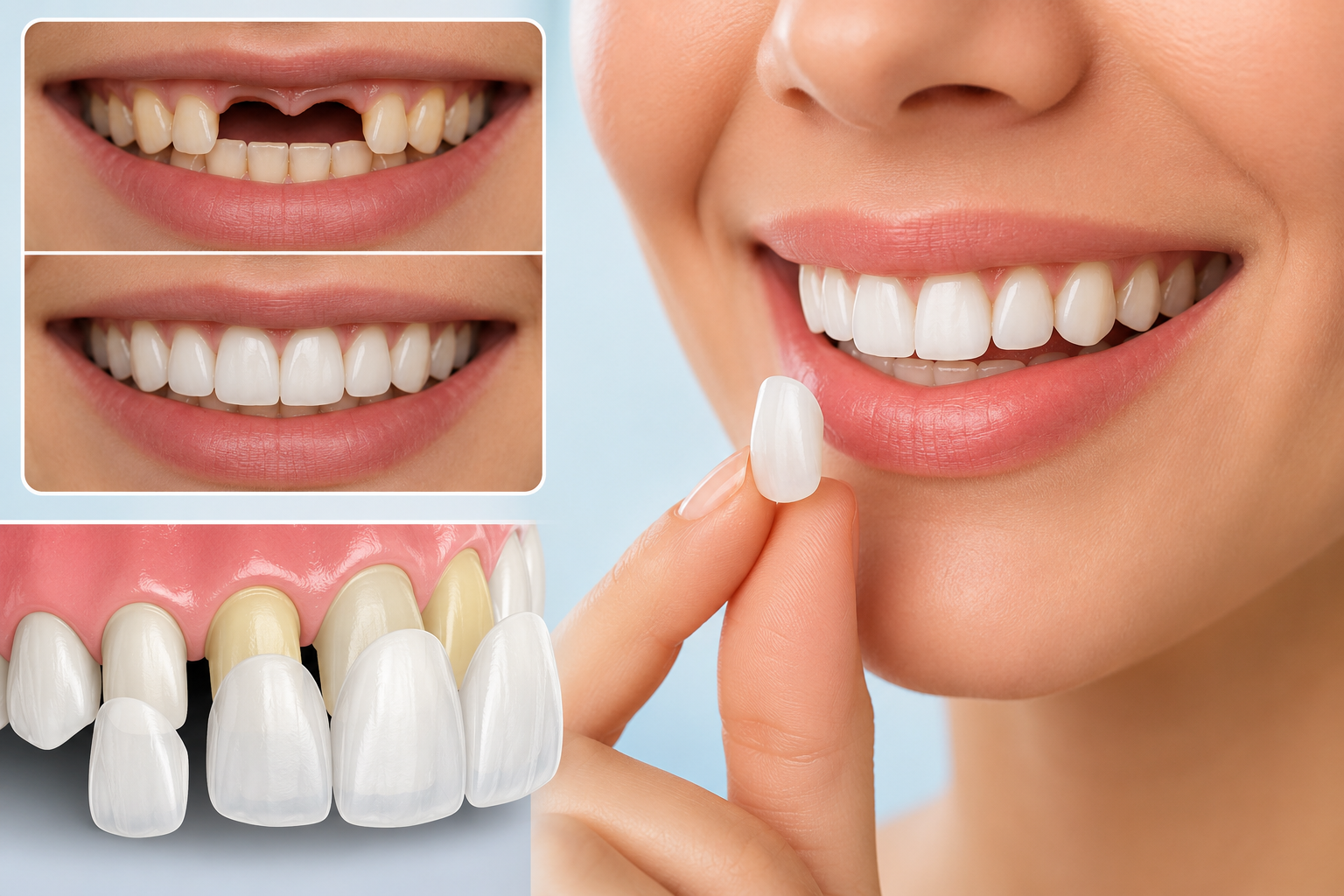
Dental veneers are thin, custom-made shells crafted from porcelain or composite resin that are bonded to the front surface of natural teeth. They are purely a cosmetic treatment, designed to improve the appearance of existing teeth their color, shape, size, and surface texture.
Veneers are widely used to cover chips, cracks, and stains, correct slightly crooked or uneven teeth, improve the size and shape of teeth, and create a brighter, more confident smile. Think of veneers like contact lenses for your teeth they enhance what is already there but cannot create something from nothing.
This last point is the key limitation when it comes to missing teeth.
Why Dental Veneers Cannot Replace Missing Teeth
Veneers cannot replace missing teeth because they require a solid foundation the natural tooth itself to bond to securely. Unlike dental implants or bridges, veneers are not standalone replacements. They work only when there is an existing tooth in place.
When a tooth is missing completely, there is no surface for the dental cement to attach the veneer. Veneers are bonded directly onto the front surface of natural teeth using dental cement, which requires enough enamel and a healthy tooth structure. Where there is no tooth, there is nothing for the thin shell to actually attach to.
Being cosmetic in nature, veneers can cover chips, discoloration, and minor gaps between teeth, but they cannot replicate the anatomy of a full tooth. They do not restore chewing function, bite strength, or the structural support that a natural tooth provides to the surrounding bone and adjacent teeth.
To have a veneer attempt to replace a missing tooth would be like placing a dental crown without any tooth structure beneath it. Without a stable foundation, it simply cannot hold.
What Veneers Can Do When You Have Missing Teeth
While veneers cannot replace missing teeth, they can still play a valuable and meaningful role as part of a broader smile restoration plan.
Veneers work beautifully alongside implants, bridges, or dentures. Here is how they fit into a complete treatment picture:
Matching surrounding teeth after an implant or bridge
If you replace a missing tooth with a dental implant or dental bridge, veneers can be applied to the neighboring natural teeth to achieve perfect color and shape matching. This creates a seamless, uniform smile where the restored tooth blends naturally with everything around it.
Improving symmetry after restorative work
When a gap is filled with a bridge or implant, the replacement tooth is custom-made to match the existing teeth. Veneers on adjacent teeth can fine-tune the symmetry, shape, and shade of the overall smile for a flawless finish.
Enhancing natural teeth alongside dentures
For patients with multiple missing teeth who use partial or full dentures, veneers can improve the visible natural teeth that remain — creating a brighter, more polished appearance that complements the denture and improves overall smile confidence.
In short, veneers are not a replacement for missing teeth but they are an excellent finishing tool that enhances the cosmetic result once the restorative work is complete.
The Right Treatments for Missing Teeth
If you are missing one or more teeth, there are three main treatment options that actually address the problem structurally and functionally:
1. Dental Implants The Gold Standard
Dental implants are widely considered the best long-term solution for replacing missing teeth. A titanium post is surgically inserted into the jawbone, where it fuses with the bone over a period of three to six months. Once healed, a custom crown is placed on top to mimic the appearance and function of a natural tooth.
Why implants are preferred:
- They function exactly like natural teeth — for biting, chewing, and speaking
- The titanium post stimulates the jawbone, preventing the bone loss that occurs after tooth loss
- They do not affect or put pressure on neighboring teeth
- With proper care, implants can last 20 years or more — often a lifetime
- They provide the most natural-looking and feeling result of any replacement option
The main considerations are cost and treatment time. Implants require surgery and a healing period, and they are typically the most expensive option. However, for most patients who are suitable candidates, the long-term value is significant.
2. Dental Bridges A Fixed Non-Surgical Option
A dental bridge fills a gap by anchoring an artificial tooth (called a pontic) onto the crowns of the healthy teeth on either side of the gap. The neighboring teeth are prepared and capped with crowns that support the false tooth in the middle literally bridging the space.
Advantages of dental bridges:
- No surgery required
- Fixed in place cannot be removed
- Completed in two to three dental visits
- Less expensive than implants
- Well-suited for replacing one to three consecutive missing teeth
Considerations:
- The healthy neighboring teeth must be filed down to accommodate the crowns, which is irreversible
- The jawbone beneath the gap still gradually shrinks over time without a root to stimulate it
- Bridges typically last 10 to 15 years before needing replacement
3. Partial and Full Dentures A Removable Option
Dentures are removable appliances that replace multiple missing teeth. A partial denture replaces some teeth while natural teeth remain, while a full denture replaces an entire arch.
Advantages of dentures:
- No surgery required
- Lower upfront cost than implants or bridges
- Can be adjusted or relined as the mouth changes over time
- A practical option for patients missing many teeth
Considerations:
- Removable — must be taken out for cleaning and at night
- Can feel less stable or natural than implants or bridges
- The jawbone continues to shrink under a denture over time, which can change the fit
- May affect speech and chewing comfort, particularly when new
Veneers and Implants A Powerful Combination
One of the most effective approaches to full smile restoration combines dental implants for the missing teeth and porcelain veneers for the surrounding natural teeth. This combination addresses both the functional and cosmetic aspects of a smile simultaneously.
If you replace a missing tooth with a dental implant, veneers can be applied to the neighboring teeth for perfect color and shape matching. The result is a smile where the implant crown and the veneered natural teeth look completely unified creating not just a functional bite, but a flawless, confident smile.
This combined approach is increasingly popular among patients who want comprehensive results that look as natural as possible.
Can You Get Veneers If You Have Missing Teeth?
Yes you can still qualify for veneers even if you are missing a tooth, as long as certain conditions are met.
Your dentist will evaluate several key factors:
Number of missing teeth — Replacing one missing tooth may be simpler than dealing with multiple gaps. The number of missing teeth influences the overall treatment strategy.
Location of the gap — Missing front teeth affect aesthetics more than back teeth, which primarily impact function. Treatment options may vary based on visibility and importance to the smile.
Condition of adjacent teeth Veneers require strong, healthy neighboring teeth to serve as a foundation. If adjacent teeth are weak, decayed, or heavily restored, alternative approaches may be more appropriate.
The key point is that missing teeth should generally be addressed with restorative treatment before or alongside veneers. A dentist will help you sequence the treatment properly so that veneers deliver the best possible cosmetic result on a healthy, restored foundation.
What Happens If Missing Teeth Are Left Untreated
It is worth understanding what happens when a missing tooth is not replaced, because this affects not just appearance but overall oral health.
Bone loss When a tooth root is removed or lost, the jawbone in that area begins to shrink gradually because there is no longer any stimulation from biting and chewing. Over time, this changes the shape of the face and makes future treatment more complex.
Shifting teeth Neighboring teeth naturally drift toward the empty space over time, becoming misaligned. This can affect the bite and make future restoration more difficult.
Bite problems When teeth shift or the bite changes, it puts uneven pressure on other teeth, leading to accelerated wear and potential jaw joint issues.
Gum changes The gum tissue in the area of a missing tooth can change shape over time, which affects the aesthetics of any future restoration.
Addressing a missing tooth sooner rather than later produces better outcomes and simpler treatment options. For more on caring for your overall oral health, read our guide on Benefits of Tongue Scraping for Better Oral Health.
Choosing the Right Treatment for Your Situation
The best treatment for a missing tooth depends on your individual situation — your overall oral health, the number and location of missing teeth, your budget, your timeline, and your personal goals.
A thorough consultation with a qualified dentist is always the starting point. During this consultation, your dentist will:
- Assess the health of your remaining teeth and gums
- Take X-rays to evaluate bone levels and structure
- Discuss your goals for both function and appearance
- Explain the most suitable options and their respective costs, timelines, and outcomes
- Help you understand how veneers might fit into your overall treatment plan if appropriate
There is no single right answer for everyone. Some patients are ideal implant candidates. Others may find a bridge more practical for their situation. And many will find that a combination of restorative and cosmetic dentistry including veneers on the natural teeth delivers the smile they have been hoping for.
A Quick Summary
| Treatment | Replaces Missing Tooth? | Best For |
|---|---|---|
| Dental Veneers | No | Cosmetic improvement of existing teeth |
| Dental Implants | Yes | Single or multiple teeth, long-term solution |
| Dental Bridge | Yes | 1–3 consecutive missing teeth, no surgery |
| Partial Denture | Yes | Multiple missing teeth, removable option |
| Veneers + Implants | Yes (combined) | Full smile restoration — function and aesthetics |
Final Thoughts
Dental veneers are one of the most effective cosmetic dentistry treatments available but they are not designed to replace missing teeth. They require an existing tooth surface to bond to, which means they cannot fill an empty space on their own.
If you are missing a tooth, the right first step is to address the gap with an appropriate restorative treatment whether that is a dental implant, a bridge, or a denture. Once the structural issue is resolved, veneers can absolutely play a role in completing the cosmetic result, creating a smile that is both fully functional and naturally beautiful.
The most important thing is to seek professional advice early. The sooner a missing tooth is addressed, the more options you have and the better the long-term outcome.