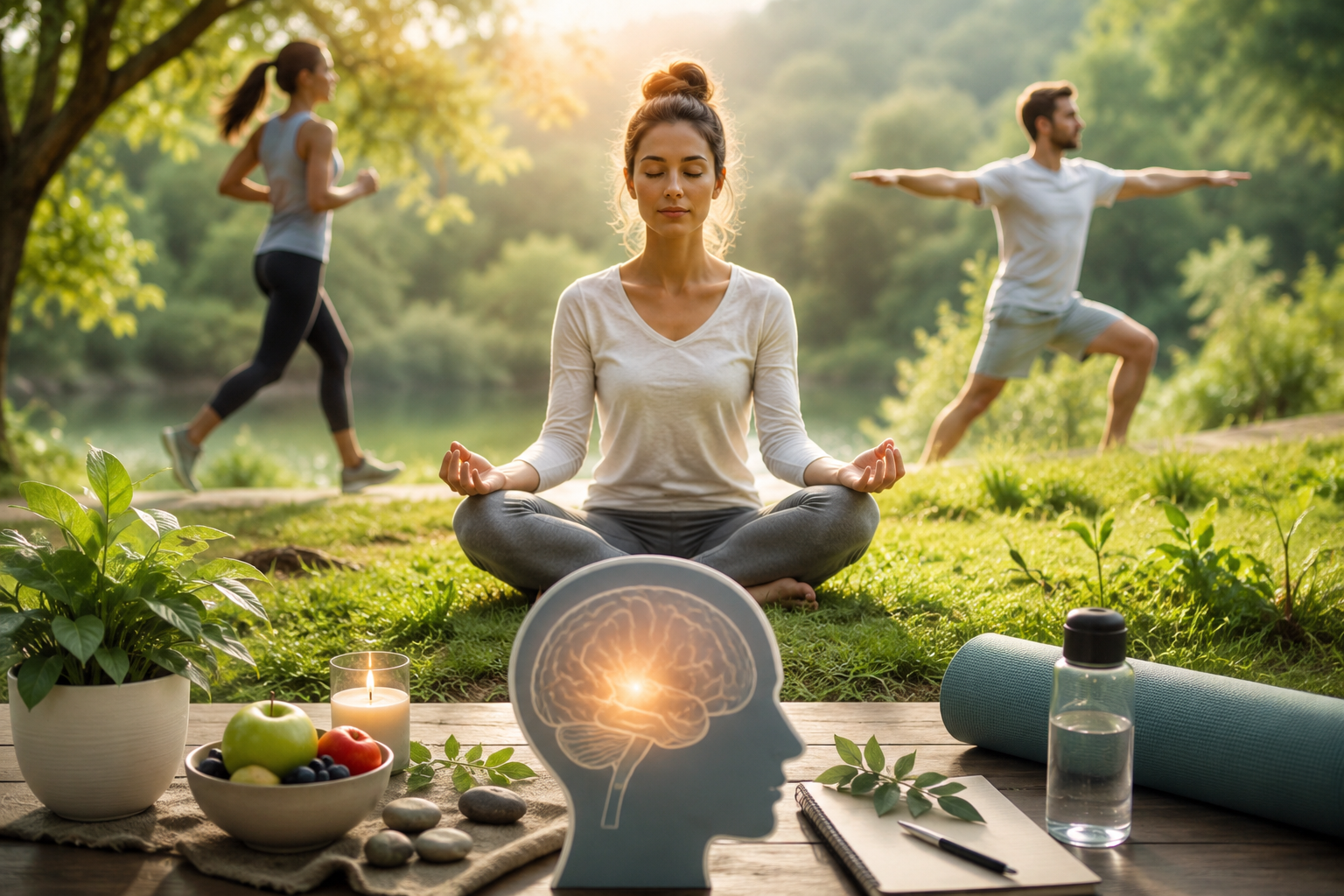
Mental health is no longer a topic whispered about in private — it’s a mainstream conversation, and rightly so. Just as we go to the gym to build physical strength, we can train our minds to be calmer, more focused, and more resilient. This complete guide covers everything you need to know about mental health exercises: what they are, why they work, and exactly how to practice them, whether you’re dealing with everyday stress, anxiety, low mood, or simply want to build stronger emotional habits.
This is a pillar guide, meaning it’s designed to be your one-stop resource. Bookmark it, come back to it, and use it as a foundation for building your personal mental wellness routine.
Table of Contents
- What Are Mental Health Exercises?
- The Science Behind Mental Health Exercises
- Breathing Exercises for Instant Calm
- Mindfulness and Meditation Practices
- Journaling Techniques for Emotional Clarity
- Physical Movement as a Mental Health Tool
- Cognitive and Thought-Based Exercises
- Relaxation and Body-Based Techniques
- Social and Connection-Based Exercises
- Mental Health Exercises for Specific Concerns
- Building a Personalized Daily Routine
- Mental Health Exercises for Different Life Stages
- Tools, Apps, and Resources
- Common Mistakes to Avoid
- When to Seek Professional Help
- Frequently Asked Questions
- Final Thoughts
1. What Are Mental Health Exercises?
Mental health exercises are structured activities and practices designed to strengthen emotional regulation, reduce stress, and support overall psychological wellbeing. Much like physical exercises target muscles, mental health exercises target the brain’s stress-response systems, emotional processing centers, and cognitive patterns.
These exercises fall into several broad categories:
- Physiological (breathing, relaxation, movement)
- Cognitive (thought reframing, problem-solving)
- Reflective (journaling, gratitude practices)
- Social (connection, communication)
- Mindfulness-based (meditation, present-moment awareness)
The beauty of mental health exercises is their accessibility. Most require no equipment, no cost, and no special training — just a few minutes of intentional practice.
2. The Science Behind Mental Health Exercises
Understanding why these exercises work makes them easier to stick with.
The stress response. When we’re stressed, the body activates the sympathetic nervous system — the “fight or flight” response. Heart rate increases, breathing becomes shallow, and cortisol floods the bloodstream. Mental health exercises like deep breathing and relaxation techniques activate the parasympathetic nervous system, the body’s natural “rest and digest” counterbalance, helping restore calm.
Neuroplasticity. The brain is capable of forming new neural pathways throughout life, a process called neuroplasticity. Repeated mental health practices — like mindfulness or cognitive reframing — physically reshape how the brain responds to stress over time, similar to how repeated physical training builds muscle.
Neurotransmitter regulation. Physical movement, social connection, and even gratitude practices have been shown to influence neurotransmitters like serotonin, dopamine, and endorphins — chemicals directly tied to mood regulation.
The negativity bias. Human brains are wired to notice and remember negative experiences more strongly than positive ones — a survival mechanism from our evolutionary past. Practices like gratitude journaling help consciously counterbalance this bias.
Understanding this science helps explain why consistency, not intensity, is the key to lasting results.
3. Breathing Exercises for Instant Calm
Breathing is one of the only bodily functions that is both automatic and controllable, making it a powerful bridge between mind and body.
Box Breathing
Inhale for 4 seconds, hold for 4, exhale for 4, hold for 4. Repeat for 4–5 rounds. Used by military personnel and athletes to stay composed under pressure.
4-7-8 Breathing
Inhale through the nose for 4 seconds, hold for 7 seconds, exhale slowly through the mouth for 8 seconds. This technique is especially effective before sleep.
Diaphragmatic (Belly) Breathing
Place one hand on your chest and one on your belly. Breathe so that only your belly hand rises. This activates the diaphragm fully and maximizes oxygen exchange, reducing tension.
Alternate Nostril Breathing
A yogic technique where you close one nostril, inhale, switch, and exhale through the other. This is known to balance the nervous system and improve focus.
Practicing any of these for even 3–5 minutes daily builds a habitual calming response you can call on during stressful moments.
4. Mindfulness and Meditation Practices
Mindfulness is the practice of anchoring attention in the present moment without judgment. It’s one of the most researched mental health exercises, with strong evidence supporting its role in reducing anxiety and depression symptoms.
Basic Sitting Meditation
Sit comfortably, close your eyes, and focus on your natural breath. When thoughts arise, acknowledge them without judgment and gently return focus to the breath.
Body Scan Meditation
Starting from your toes and moving upward, mentally scan each part of your body, noticing sensations without trying to change them. This builds body awareness and reduces tension.
Mindful Observation
Choose an object — a candle flame, a leaf, a cup of tea — and observe it closely for a few minutes, engaging all your senses. This trains attention and reduces mental clutter.
Walking Meditation
Instead of sitting still, practice mindfulness while walking slowly, paying close attention to each step, the sensation of your feet touching the ground, and your surroundings.
5-4-3-2-1 Grounding Technique
A quick mindfulness exercise for anxious moments: identify 5 things you can see, 4 things you can touch, 3 things you can hear, 2 things you can smell, and 1 thing you can taste. This pulls attention out of anxious thoughts and into the present.
5. Journaling Techniques for Emotional Clarity
Writing is a powerful tool for processing emotions and gaining perspective.
Gratitude Journaling
Each day, write three things you’re grateful for. Be specific — instead of “my family,” try “my sister calling to check on me today.”
Stream-of-Consciousness Writing
Set a timer for 10 minutes and write continuously without editing or overthinking. This helps release pent-up thoughts and emotions.
The Worry Journal
Write down what’s worrying you, then next to it, write a realistic next step or reason why it may not be as catastrophic as it feels. This helps externalize anxiety.
Mood Tracking
Rate your mood daily on a scale of 1–10 along with a brief note on possible triggers. Over weeks, patterns often emerge that offer valuable self-insight.
Letter Writing (Unsent)
Write a letter to someone — or to yourself — expressing feelings you haven’t been able to say out loud. You never have to send it; the value is in the expression itself.
6. Physical Movement as a Mental Health Tool
Movement and mental health are deeply connected. Physical activity reduces cortisol, increases endorphins, and improves sleep — all of which support emotional wellbeing.
- Walking: A simple 20–30 minute walk, especially outdoors, can noticeably reduce stress and improve mood.
- Yoga: Combines movement, breath, and mindfulness, making it one of the most holistic mental health exercises available.
- Dancing: Free-form movement to music can be a joyful, cathartic release of built-up tension.
- Strength Training: Builds not just physical resilience but a sense of accomplishment and control.
- Stretching: Even 5 minutes of gentle stretching can release physical tension linked to stress.
You don’t need to be an athlete. The mental health benefits of movement come from consistency, not intensity.
7. Cognitive and Thought-Based Exercises
These exercises target unhelpful thinking patterns directly, often drawing from principles used in Cognitive Behavioral Therapy (CBT).
Thought Records
When you notice a distressing thought, write it down along with the situation, the emotion it triggered, and evidence for and against the thought. Then write a more balanced alternative thought.
Identifying Cognitive Distortions
Learn to recognize common patterns like catastrophizing (“this will ruin everything”), black-and-white thinking (“I always fail”), or mind-reading (“they must think I’m incompetent”). Simply naming the distortion reduces its power.
The “Best Friend” Technique
Ask yourself: “What would I say to a close friend who had this thought?” We’re often far kinder and more rational when advising others than ourselves.
Reframing Exercise
Take a negative statement and consciously rewrite it in a more balanced way. For example, “I failed at this” becomes “This attempt didn’t work, but I learned something for next time.”
8. Relaxation and Body-Based Techniques
Progressive Muscle Relaxation (PMR)
Starting from your feet and working upward, tense each muscle group for 5 seconds, then release, noticing the contrast between tension and relaxation. This is excellent for physical stress relief and better sleep.
Guided Imagery
Close your eyes and vividly imagine a peaceful place — a beach, forest, or mountain. Engage all your senses in the visualization. This technique can lower heart rate and reduce anxiety.
Self-Massage
Gently massaging your temples, shoulders, or hands can release physical tension tied to stress.
Warm Bath or Shower Ritual
Combining warmth with mindful presence — noticing the sensation of water, the smell of soap — can be a simple but effective relaxation ritual.
9. Social and Connection-Based Exercises
Humans are inherently social, and connection is one of the strongest predictors of long-term mental wellbeing.
- Check-In Calls: Regularly reach out to friends or family, even with a simple message.
- Active Listening Practice: In conversations, focus fully on the other person without planning your response — this deepens connection and reduces your own anxious overthinking.
- Acts of Kindness: Small gestures, like complimenting someone or helping a colleague, boost both the giver’s and receiver’s mood.
- Support Groups: Whether in-person or online, connecting with others who share similar experiences can reduce feelings of isolation.
10. Mental Health Exercises for Specific Concerns
For Anxiety:
Box breathing, the 5-4-3-2-1 grounding technique, and worry journaling are especially effective for calming an overactive nervous system.
For Low Mood:
Gratitude journaling, physical movement, and social connection exercises help counter the low motivation and negative thinking common with low mood.
For Stress:
Progressive muscle relaxation, diaphragmatic breathing, and short mindfulness breaks throughout the day help manage cumulative stress.
For Sleep Issues:
4-7-8 breathing, body scan meditation, and avoiding screens before bed (digital detox) can improve sleep quality.
For Focus and Concentration:
Mindful observation exercises and short meditation sessions can sharpen attention over time.
Note: These exercises support general wellbeing but are not a replacement for professional treatment of diagnosed conditions.
11. Building a Personalized Daily Routine
The key to lasting benefit is consistency, not perfection. Here’s a sample framework you can adapt:
Morning (5–10 minutes)
- Deep breathing or a short meditation
- Setting an intention for the day
Midday (5–15 minutes)
- A short walk or stretch break
- A mindful pause — even just 5 mindful breaths between tasks
Evening (10–15 minutes)
- Gratitude journaling
- Progressive muscle relaxation or a body scan before bed
Start with just one exercise and build gradually. Trying to overhaul your entire routine overnight often leads to burnout on the habit itself.
12. Mental Health Exercises for Different Life Stages
For Students: Short mindfulness breaks between study sessions, breathing exercises before exams, and journaling to process academic stress.
For Working Professionals: Midday walking breaks, boundary-setting exercises, and end-of-day “mental shutdown” rituals to separate work from personal time.
For Parents: Brief mindfulness moments during daily routines, gratitude practices focused on small wins, and prioritizing even 10 minutes of alone time daily.
For Older Adults: Gentle movement like walking or tai chi, social connection exercises to combat isolation, and reflective journaling or life-review exercises.
13. Tools, Apps, and Resources
While mental health exercises don’t require special tools, some people find structure helpful:
- Guided meditation apps for beginners who want direction
- Journaling apps or simple notebooks for daily reflection
- Timers for breathing exercises or meditation sessions
- Fitness trackers to build consistency with movement goals
The tool matters far less than the consistency of practice.
14. Common Mistakes to Avoid
- Expecting instant results: Mental health exercises work cumulatively, like physical fitness.
- All-or-nothing thinking: Missing a day doesn’t erase progress — consistency over weeks matters more than perfection.
- Comparing your practice to others: What works for one person may not work for another; personalization matters.
- Using exercises as a total substitute for professional care: These practices support wellbeing but aren’t a replacement for therapy when needed.
- Overloading your routine: Trying to do every exercise at once often leads to abandoning all of them. Start small.
15. When to Seek Professional Help
Mental health exercises are valuable everyday tools, but they have limits. Consider reaching out to a licensed therapist, counselor, or doctor if you experience:
- Persistent sadness or hopelessness lasting more than two weeks
- Anxiety that interferes with daily functioning
- Difficulty sleeping, eating, or concentrating over an extended period
- Thoughts of self-harm
- Using substances to cope with emotions
- A general sense that things aren’t improving despite self-help efforts
Seeking help is a sign of strength, not weakness, and professional support can work alongside the exercises in this guide.
16. Frequently Asked Questions
How long does it take to see results from mental health exercises?
Some techniques, like breathing exercises, offer immediate relief. Others, like mindfulness or cognitive reframing, build benefits over weeks of consistent practice.
Can mental health exercises replace therapy?
No. They are valuable complementary tools but are not a substitute for professional treatment, especially for diagnosed mental health conditions.
How much time do I need to dedicate daily?
Even 10–15 minutes daily, consistently practiced, can create meaningful change over time.
What if I can’t sit still for meditation?
Try movement-based practices like walking meditation or yoga instead of traditional seated meditation.
Are these exercises suitable for children?
Simplified versions of breathing exercises and gratitude practices can be introduced to children, though guidance from a parent or professional is recommended.
17. Final Thoughts
Mental health, much like physical health, thrives on consistent, intentional care. The exercises in this guide — from breathing techniques and mindfulness to journaling, movement, and social connection — offer accessible, science-backed ways to build emotional resilience in daily life.
You don’t need to implement everything at once. Choose one or two practices that resonate with you, build them into your daily routine, and allow the benefits to compound over time. And remember: taking care of your mental health is not a one-time fix but an ongoing, lifelong practice — one that deserves the same care and consistency we give to our physical health.