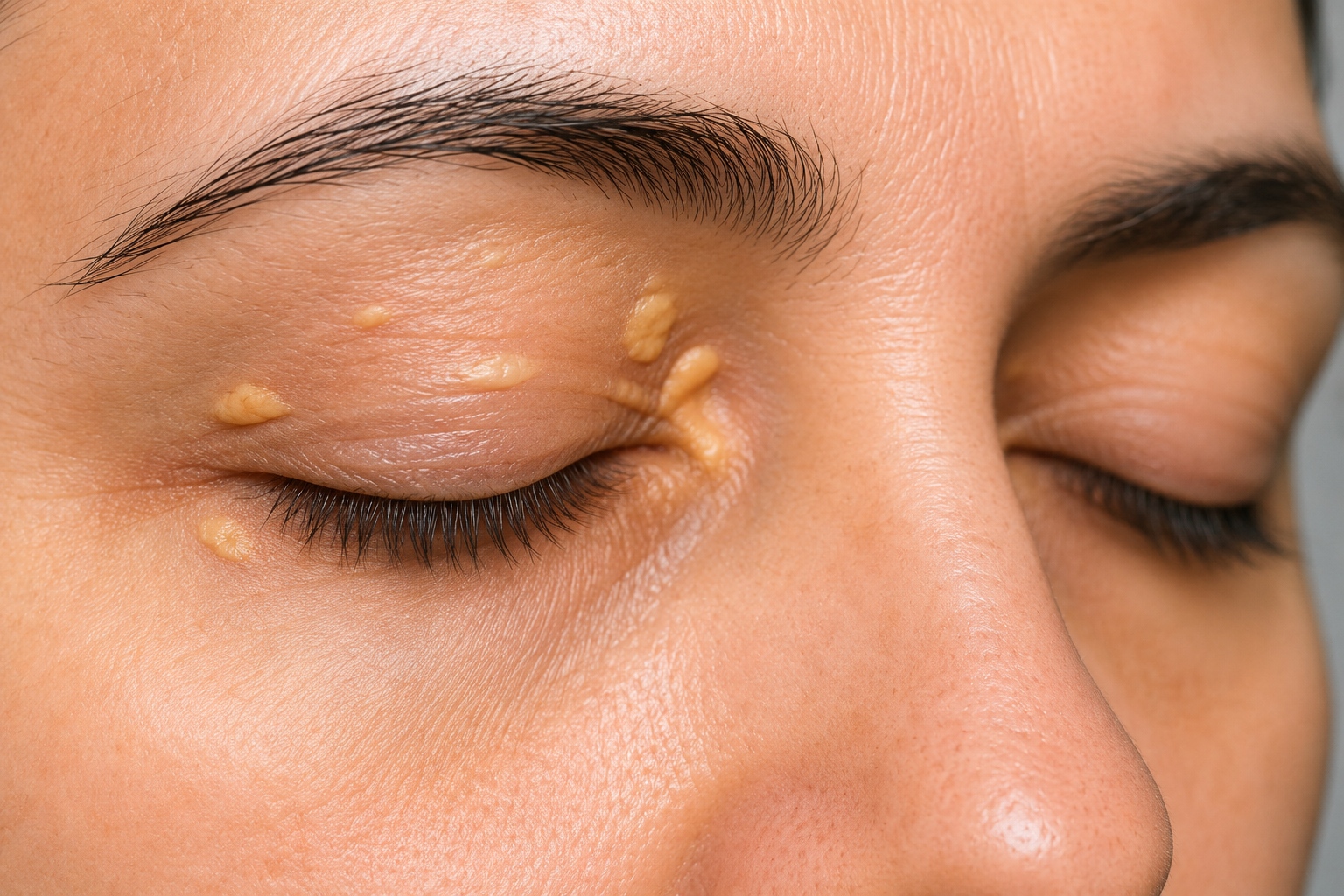
Small yellowish bumps around the eyes can be alarming, especially if they appear without warning. Many people refer to these as “cholesterol pimples,” but they are usually a condition called xanthelasma. These soft, yellow cholesterol deposits develop under the skin, most commonly on or around the eyelids. While they are generally painless, they may be an early warning sign of high cholesterol or other lipid disorders.
Not everyone with xanthelasma has high cholesterol, but the condition should never be ignored. In some cases, it may increase the likelihood of heart disease or other cardiovascular problems. Understanding why these bumps develop and how they can be treated is the first step toward protecting your health.
What Are Cholesterol Pimples Around the Eyes?
Despite their common name, cholesterol pimples are not true pimples. They are small, flat, yellowish plaques made up of cholesterol deposits beneath the skin.
They most commonly appear:
- On the upper eyelids
- Near the inner corners of the eyes
- On both eyes at the same time
- Slowly over several months or years
These deposits are harmless and usually do not affect vision, but they may indicate an underlying health condition.
What Causes Cholesterol Deposits Around the Eyes?
Several factors may contribute to the development of xanthelasma.
Common causes include:
- High LDL (bad) cholesterol
- High triglyceride levels
- Diabetes
- Obesity
- Liver disease
- Thyroid disorders
- Family history of high cholesterol
- Increasing age
Some people develop xanthelasma even when their cholesterol levels are normal.
What Do Cholesterol Bumps Look Like?
The appearance of these deposits is usually distinctive.
They are often:
- Soft to the touch
- Yellow or yellow-orange
- Flat or slightly raised
- Painless
- Slow growing
Unlike acne, they do not contain pus and usually do not become red or inflamed.
Are Cholesterol Pimples Dangerous?
The bumps themselves are not dangerous or cancerous. However, they may signal an increased risk of cardiovascular disease.
Because high cholesterol often has no symptoms, visible cholesterol deposits around the eyes can be an important warning sign that should not be ignored.
A healthcare provider may recommend blood tests to evaluate your cholesterol levels and overall heart health.
How Are They Diagnosed?
Diagnosis is usually straightforward.
Your doctor may perform:
- A physical examination
- A lipid profile blood test
- Blood sugar testing if diabetes is suspected
- Liver function tests in some cases
- Thyroid function tests when appropriate
Early diagnosis allows treatment to begin before serious complications develop.
Treatment Options
Treatment depends on whether the goal is improving appearance or managing cholesterol.
Medical treatment may include:
- Cholesterol-lowering medications
- Dietary changes
- Regular exercise
- Weight management
If the deposits are cosmetically bothersome, removal options include:
- Laser treatment
- Surgical removal
- Chemical peeling in selected cases
- Cryotherapy in certain situations
Even after removal, the deposits may return if cholesterol remains uncontrolled.
Foods That Help Lower Cholesterol
A heart-healthy diet can improve cholesterol levels and reduce cardiovascular risk.
Choose foods such as:
- Oats
- Barley
- Beans
- Lentils
- Apples
- Berries
- Avocados
- Salmon
- Sardines
- Almonds
- Walnuts
- Olive oil
- Leafy green vegetables
Limiting processed foods, sugary drinks, and saturated fats can also make a significant difference.
When Should You See a Doctor?
Arrange a medical evaluation if you notice:
- Yellow bumps near your eyes
- A family history of high cholesterol
- Chest pain
- High blood pressure
- Diabetes
- Shortness of breath
- A history of heart disease
A simple blood test can determine whether your cholesterol levels are within a healthy range.
Frequently Asked Questions
Are cholesterol pimples the same as acne?
No. They are cholesterol deposits beneath the skin and are not related to acne.
Can cholesterol bumps disappear naturally?
They rarely disappear on their own. Controlling cholesterol may help prevent new deposits, but existing ones often require medical treatment if removal is desired.
Does everyone with xanthelasma have high cholesterol?
No. Some people have normal cholesterol levels, but many have an underlying lipid disorder that should be evaluated.
Can diet help prevent cholesterol deposits?
Yes. A healthy diet, regular exercise, and maintaining a healthy weight can reduce the risk of high cholesterol and related complications.
Conclusion
Cholesterol pimples around the eyes, also known as xanthelasma, are usually harmless but can be an important sign of underlying cholesterol problems. While they do not cause pain or vision loss, they should prompt a medical evaluation to check cholesterol and cardiovascular health. Early diagnosis, healthy lifestyle changes, and appropriate treatment can reduce long-term health risks and improve overall well-being.
Related article: Can High Cholesterol Cause Headaches? Causes Explained