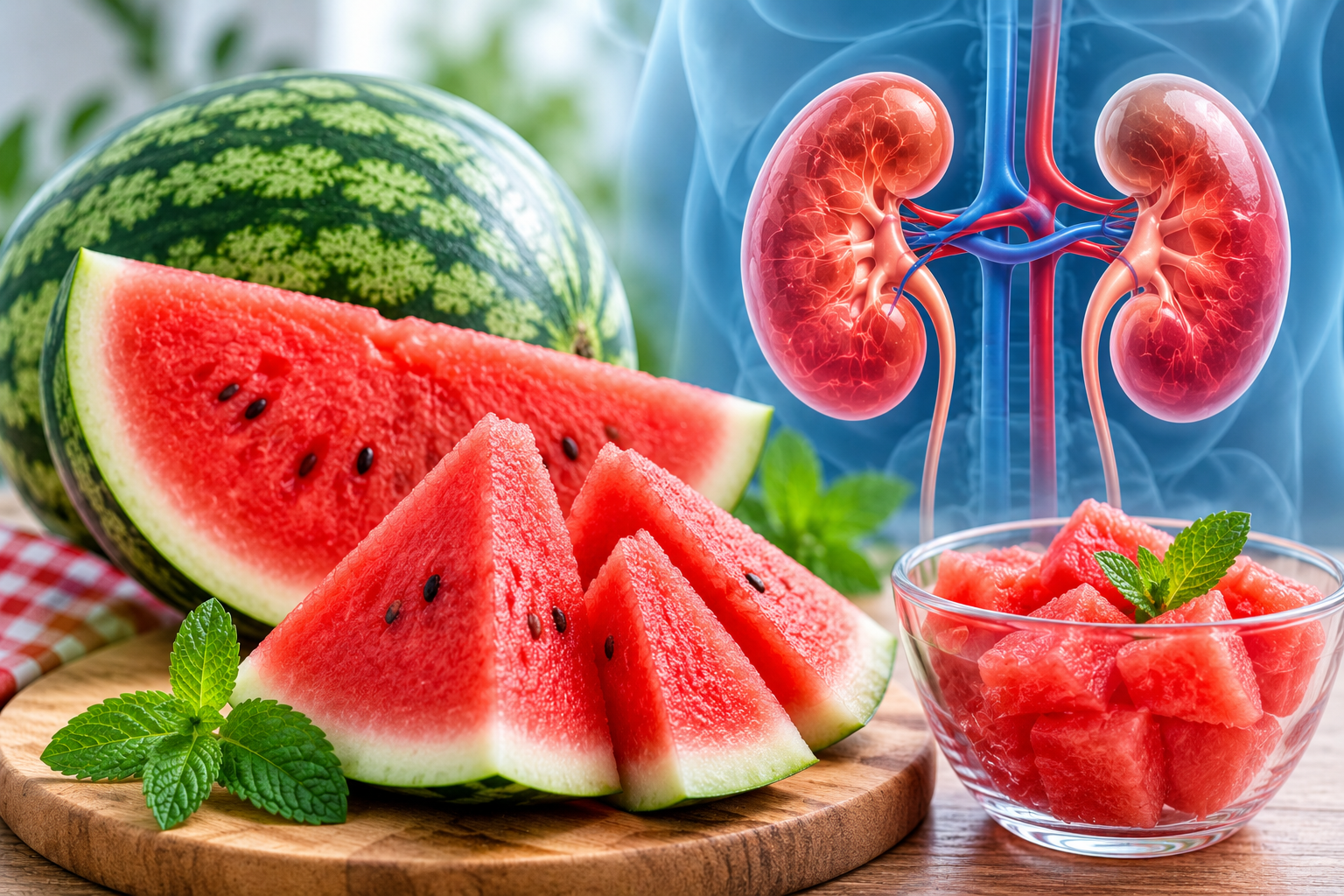
Watermelon is one of the most refreshing fruits, especially during the summer months. Rich in water, vitamins, antioxidants, and natural electrolytes, it is often recommended as part of a healthy diet. Many people also wonder whether watermelon is good for kidney health and if it can help support normal kidney function.
For most healthy individuals, watermelon is a nutritious choice that helps with hydration and provides important nutrients. However, people with chronic kidney disease (CKD) or advanced kidney problems may need to limit watermelon because it contains potassium, which can build up in the body when the kidneys are not working properly.
Understanding both the benefits and the potential risks can help you decide whether watermelon is a healthy addition to your diet.
Why Is Watermelon Good for Your Kidneys?
Watermelon is made up of about 92% water, making it one of the best fruits for staying hydrated. Proper hydration helps the kidneys filter waste products from the blood and remove them through urine.
Watermelon also contains antioxidants such as lycopene and vitamin C, which help protect cells from oxidative stress.
For healthy people, eating watermelon in moderation may support overall kidney and heart health.
Nutrients Found in Watermelon
One cup of fresh watermelon contains several important nutrients, including:
- Vitamin C
- Vitamin A
- Potassium
- Magnesium
- Lycopene
- Citrulline
- Natural antioxidants
- Dietary fiber (small amount)
These nutrients contribute to hydration, immune function, and cardiovascular health.
Health Benefits of Watermelon
Adding watermelon to a balanced diet may provide several health benefits.
Supports Hydration
Because watermelon contains mostly water, it helps maintain proper hydration, especially during hot weather.
Rich in Antioxidants
Lycopene helps protect cells from damage caused by free radicals and supports heart health.
May Support Healthy Blood Pressure
Watermelon contains citrulline, an amino acid that may help improve blood vessel function and healthy circulation.
Low in Calories
Watermelon is naturally low in calories, making it a healthy snack for people trying to maintain a healthy weight.
Supports Digestive Health
Its water content and small amount of fiber may help support normal digestion.
Is Watermelon Safe for People With Kidney Disease?
It depends on the stage of kidney disease.
People with healthy kidneys can usually enjoy watermelon without concern.
However, people with chronic kidney disease (CKD) should speak with their healthcare provider or dietitian before eating large amounts because watermelon contains potassium.
When damaged kidneys cannot remove excess potassium effectively, blood potassium levels may become dangerously high.
Who Should Limit Watermelon?
You may need to limit watermelon if you have:
- Advanced kidney disease
- High potassium levels (hyperkalemia)
- Kidney failure
- Dialysis treatment
- Certain heart conditions requiring potassium restriction
Always follow your doctor’s dietary recommendations.
Tips for Eating Watermelon Safely
To enjoy watermelon as part of a healthy diet:
- Eat moderate portion sizes.
- Choose fresh watermelon instead of sugary watermelon drinks.
- Pair it with other healthy foods.
- Avoid adding extra sugar.
- Store cut watermelon in the refrigerator.
Frequently Asked Questions
Is watermelon good for kidney stones?
Watermelon helps increase fluid intake, which may reduce the risk of some kidney stones. However, it is not a treatment for existing stones.
Can people with chronic kidney disease eat watermelon?
Some people can eat small portions, but those with advanced CKD should follow their healthcare provider’s dietary advice because of the fruit’s potassium content.
Does watermelon detox the kidneys?
Watermelon supports hydration, which helps normal kidney function, but it does not “detox” the kidneys in the medical sense.
How much watermelon can I eat daily?
Healthy adults can generally enjoy watermelon in moderation as part of a balanced diet. Portion sizes may vary depending on individual health conditions.
Conclusion
Watermelon is a refreshing, nutrient-rich fruit that supports hydration and provides valuable vitamins and antioxidants. For people with healthy kidneys, it can be part of a balanced diet that promotes overall wellness. However, individuals with chronic kidney disease or high potassium levels should consult their healthcare provider before eating large amounts. Choosing fresh watermelon, practicing portion control, and maintaining a healthy lifestyle are simple ways to enjoy its benefits while protecting kidney health.